
In This Article
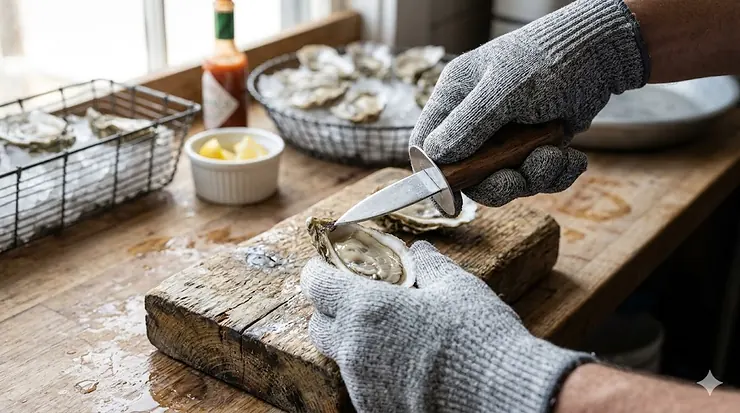
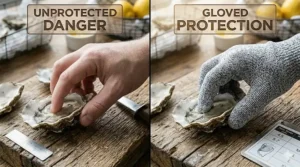
There’s nothing quite like the satisfaction of cracking open a fresh oyster—until your knife slips and you’re headed to the emergency room. I’ve watched too many enthusiastic home shuckers underestimate how sharp those shells are and how quickly things can go wrong. Oyster shucking gloves cut resistant aren’t just recommended safety gear; they’re the difference between enjoying your seafood feast and spending your evening getting stitches.
The reality is that oyster shells are razor-sharp, and even experienced shuckers slip occasionally. According to FDA guidelines on shellfish handling safety, proper protective equipment significantly reduces hand injuries during seafood processing. Whether you’re shucking a dozen oysters for a dinner party or processing hundreds at a restaurant oyster bar, the right cut-resistant glove protects against both the sharp shells and the inevitable knife slips that happen when you’re working with slippery bivalves.
What most buyers don’t realize is that not all cut-resistant gloves are created equal. The ANSI cut resistance rating system ranges from Level A1 to A9, and for oyster shucking, you need at least Level 5 protection to handle the dual threats of jagged shells and sharp knives. Beyond the safety rating, factors like grip on wet surfaces, dexterity for precision work, and food-grade materials all matter when you’re choosing shellfish shucking gloves for commercial seafood handling or home use.
Quick Comparison: Top Oyster Shucking Gloves Cut Resistant at a Glance
| Product | Cut Level | Material | Best For | Price Range |
|---|---|---|---|---|
| Dowellife Level 5 | ANSI A5 | HPPE Blend | Home shuckers seeking comfort | $15-$25 |
| NoCry Premium | Level 5 | HPPE Fiber | Beginners on a budget | $12-$20 |
| Schwer SlicePro A9 | ANSI A9 | Steel Wire/HPPE | High-volume commercial use | $25-$35 |
| OZERO Cut Resistant | Level 5 | HDPE Material | Restaurant kitchens | $18-$28 |
| Rockland Guard Set | EN388 Level 5 | Proprietary Blend | Gift sets with knife included | $20-$30 |
| San Jamar 1000 | Heavy-Duty Latex | Rubber/Cotton | Traditionalists preferring grip | $18-$26 |
| Dowellife Mesh A9 | ANSI A9 | Stainless Steel Mesh | Maximum protection needs | $30-$45 |
Looking at this comparison, the sweet spot for most home oyster enthusiasts falls in the $18-$28 range with Level 5 protection. Budget-conscious buyers can find solid options like the NoCry under $20, but if you’re shucking more than 20 oysters weekly, the durability of the Schwer A9 models justifies the extra investment. The San Jamar stands apart as the only rubber option—it sacrifices some cut resistance for superior grip, which matters more than you’d think when your hands are covered in oyster liquor.
💬 Just one click — help others make better buying decisions too! 😊
Top 7 Oyster Shucking Gloves Cut Resistant: Expert Analysis
1. Dowellife Cut Resistant Gloves Level 5 — The All-Around Champion
The Dowellife Level 5 gloves strike that rare balance between serious protection and actual comfort—something cheaper gloves consistently fail at. With ANSI Level 5 certification, these gloves use a high-performance polyethylene (HPPE) blend that’s four times stronger than leather but weighs less than two ounces per glove.
Here’s what the spec sheet doesn’t tell you: the silicone dots on the palm create friction even when shells are dripping wet, which prevents that terrifying moment when an oyster squirts out of your grip mid-shuck. The elastic cuff extends well past your wrist, protecting that vulnerable area where most amateur shuckers get cut when their grip slips forward. At around $15-$25 for a pair, you’re getting ambidextrous gloves that fit either hand—practical when you realize that commercial shuckers typically wear just one glove on their holding hand.
Customer feedback consistently praises the dexterity these gloves maintain. One restaurant reviewer mentioned shucking 200 oysters during a Friday service without hand fatigue, which speaks to the breathable knit construction. The trade-off is durability—heavy daily use will show wear after 3-4 months, but that’s acceptable for the price point.
Pros:
✅ Excellent dexterity for precise knife work
✅ Machine washable and easy to clean
✅ Food-grade certified materials
Cons:
❌ Moderate lifespan under heavy commercial use
❌ Sizing runs slightly small for larger hands
These gloves excel for home shuckers who entertain regularly and want restaurant-quality protection without the bulk. If you’re opening 10-30 oysters at a time and value feeling what you’re doing, this is your glove. Worth noting: buy one size up if you’re between sizes.
2. NoCry Premium Cut Resistant Gloves — Budget-Friendly Entry Point
The NoCry Premium gloves prove you don’t need to spend $40 to keep your hands safe. These Level 5 certified gloves typically retail in the $12-$20 range, making them the go-to recommendation for people just discovering their love of raw oysters.
The construction uses food-grade HPPE fibers with a lightweight, flexible feel that surprised me—cheap cut-resistant gloves often feel like wearing cardboard boxes. What makes NoCry practical for oyster work specifically is the ambidextrous design and the fact they’re genuinely machine washable without falling apart. The company includes a complimentary eBook on knife safety, which is more useful than you’d expect for first-time shuckers who don’t yet understand proper technique.
Customer reviews consistently mention these gloves as a “starter” option, and that’s fair. They lack the grippy coating found on premium models, so expect a learning curve if you’re working with particularly slippery oysters. The cuff is shorter than the Dowellife, leaving more wrist exposed. But for occasional home use—say, a special occasion oyster roast—they deliver adequate protection at a price that won’t make you hesitate to replace them when needed.
Pros:
✅ Most affordable quality option
✅ True Level 5 certification
✅ Lightweight and easy to wear
Cons:
❌ Less grip on wet surfaces than premium models
❌ Shorter cuff length
Perfect for beginners who want to test the oyster-shucking waters without major investment, or as backup gloves to keep in your tackle box for beach picnics. The value proposition here is unbeatable if you’re shucking less than once a month.
3. Schwer SlicePro ANSI A9 Cut Resistant Gloves — Professional-Grade Armor
When commercial oyster bars need gloves that survive hundreds of daily shucks, they reach for the Schwer SlicePro ANSI A9 models. That A9 rating means these gloves withstand up to 6,000 grams of cutting force before breakthrough—more than triple the protection of standard Level 5 gloves.
The construction combines stainless steel wire with HPPE yarn, creating a glove that feels substantial without being stiff. This matters during long shucking sessions: the reinforced thumb area (where most knife slips occur) adds protection exactly where you need it most. At $25-$35, these cost more than consumer-grade options, but talk to any oyster shucker who’s been doing this professionally for years and they’ll tell you the longevity justifies the price.
What the marketing materials don’t emphasize enough is the breathability. Despite the steel wire content, these gloves include moisture-wicking properties that keep your hands from turning into sweaty messes during high-volume service. Commercial kitchens report these gloves lasting 6-12 months under daily use—compare that to cheaper gloves that might last 6 weeks in the same environment.
Customer feedback from restaurant settings highlights one consistent point: these gloves maintain their cut resistance even after months of washing. The non-PFAS coating is a modern safety upgrade you won’t find in older glove models, addressing concerns about chemical exposure in food preparation environments.
Pros:
✅ Maximum ANSI A9 protection level
✅ Exceptional durability for commercial use
✅ Reinforced thumb for critical protection
Cons:
❌ Higher upfront cost
❌ Slightly less tactile feel than lighter gloves
Best for high-volume commercial operations, professional oyster shuckers, or serious home enthusiasts who shuck multiple times weekly. If you’re processing 50+ oysters regularly, the durability advantage makes these a better long-term investment than repeatedly replacing cheaper gloves.
4. OZERO Cut Resistant Gloves — Restaurant Kitchen Workhorse
The OZERO gloves occupy an interesting middle ground: more protective than budget options, more affordable than premium commercial models. These Level 5 gloves use HDPE material that’s four times stronger than leather, with a practical design that works equally well for oyster shucking and general kitchen prep work.
The silicone palm coating provides reliable grip even when shells and hands are soaking wet—a detail that matters more than most people realize until they’ve had an oyster shoot across the kitchen. The elastic cuff design allows quick on-and-off between tasks, useful in busy restaurant environments where you’re switching between shucking and other prep work. In the $18-$28 range, these represent solid value for restaurant kitchens that need multiple pairs in rotation.
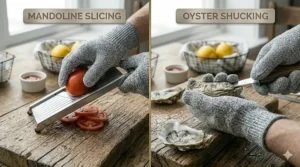
What sets OZERO apart is versatility. Customer reviews from professional kitchens mention using these gloves for everything from oyster shucking to fish filleting to mandolin slicing, which makes them easier to justify in a commercial setting where you’re buying multiple pairs. The breathable construction handles extended wear better than you’d expect at this price point.
The trade-off versus premium models like Schwer is lifespan—expect 3-5 months in daily commercial use versus 6-12 months for the higher-tier options. But at nearly half the price, you can replace them twice and still save money.
Pros:
✅ Versatile for multiple kitchen tasks
✅ Good grip-to-protection balance
✅ Reasonable price for commercial quantities
Cons:
❌ Moderate durability versus premium models
❌ Standard sizing may not fit all hand shapes
Ideal for restaurants that need reliable gloves for mixed kitchen duties, or home cooks who want a single pair of gloves that handle both oyster shucking and other cutting tasks. The multi-use capability makes these particularly appealing for home kitchens where drawer space is limited.
5. Rockland Guard Oyster Shucking Set — Complete Beginner Package
The Rockland Guard set bundles Level 5 cut-resistant gloves with a 3.5-inch stainless steel oyster knife, creating a ready-to-shuck package that makes sense for people just getting started. The gloves carry EN388 Level 5 certification—the European standard that’s roughly equivalent to ANSI Level 5 in practical terms.
What makes this set appealing isn’t just the bundling, though that’s convenient. The gloves use a proprietary blend material that balances protection with the flexibility needed for precise knife work. The included oyster knife features a non-slip handle and bent tip design optimized for the hinge-entry shucking method. At $20-$30 for the complete set, you’re paying roughly the same as buying quality gloves alone, making the knife essentially free.
Customer reviews consistently mention this as a gift purchase, and that’s the sweet spot: someone in your life mentions wanting to try shucking oysters at home, and this set provides everything they need without research paralysis. The gloves are food-safe and machine washable, handling the inevitable mess that comes with learning to shuck.
The practical limitation is that serious shuckers will eventually want to upgrade both components. The gloves perform adequately but lack the grip coating found on premium models. The knife is serviceable but not the precision tool experienced shuckers prefer. Think of this as the “starter pack” that gets you safely into the hobby.
Pros:
✅ Complete set with knife included
✅ Great gift option for oyster enthusiasts
✅ Legitimate safety certification
Cons:
❌ Components are adequate rather than exceptional
❌ Gloves may run small (size up recommended)
Perfect for gift-giving, introducing friends to oyster shucking, or equipping a vacation rental kitchen where you want safe, functional equipment without premium pricing. The value proposition makes sense primarily because of the bundling.
6. San Jamar 1000 Rubber Oyster Shucking Glove — Traditional Grip-First Design
The San Jamar 1000 takes a completely different approach to oyster safety: thick textured latex rubber over cotton lining, prioritizing grip over cut resistance. These gloves cost around $18-$26 for a pair and represent the traditional commercial oyster bar approach that predates modern cut-resistant materials.
Here’s what makes rubber gloves relevant even with modern alternatives available: that textured latex exterior grabs wet oyster shells with authority that synthetic fibers can’t match. In busy restaurant settings where speed matters alongside safety, the grip advantage lets experienced shuckers work faster without worrying about shells slipping. The cotton lining absorbs sweat and prevents the clammy feeling that makes some people hate wearing gloves for extended periods.
The obvious trade-off is protection level. These gloves resist cuts from shells better than bare hands, but won’t stop a full-force knife slip the way HPPE or steel mesh gloves will. The thickness provides some puncture resistance, but these are fundamentally grip gloves with moderate protection rather than protection gloves with added grip. Customer reviews from long-time commercial shuckers mention preferring these specifically because they “feel” the oyster better through the material.
Sizing is challenging—San Jamar lists these as “one size fits all,” which in reality means they fit average-sized hands reasonably and everyone else poorly. Smaller hands swim in them; larger hands find them too tight in the fingers.
Pros:
✅ Superior wet grip versus synthetic materials
✅ Comfortable cotton lining for extended wear
✅ Traditional design preferred by some professionals
Cons:
❌ Lower cut protection than modern alternatives
❌ One-size-fits-all sizing fits few people well
Best for experienced shuckers who understand knife control and prioritize grip over maximum protection, or commercial settings where the traditional rubber glove approach is already established. These aren’t the choice for beginners—the lower protection requires better technique to use safely.
7. Dowellife ANSI A9 Stainless Steel Mesh Glove — Maximum Protection Champion
The Dowellife Mesh A9 represents the top tier of oyster protection: genuine stainless steel mesh construction that achieves ANSI A9 certification. At $30-$45 per glove (sold individually, not in pairs), these are the most expensive option in this roundup and target serious users who need absolute maximum protection.
The 316 stainless steel wire construction creates a true barrier against both cuts and punctures. Unlike HPPE fiber gloves that resist cutting through material strength, mesh gloves work by not allowing the blade to concentrate force on individual fibers. The practical result is a glove that will stop a full-force knife slip that would cut through lesser gloves. The touchscreen-compatible mesh means you can check orders or answer your phone without removing the glove—useful in commercial settings.
What the spec sheet can’t convey is the weight difference. Steel mesh gloves feel substantial on your hand in a way synthetic gloves don’t. Some users love the confidence that weight provides; others find it fatiguing during long shucking sessions. The rigidity compared to synthetic gloves means less dexterity for fine knife work, which matters more for certain shucking techniques than others.
Maintenance is straightforward: these gloves are genuinely dishwasher safe and don’t degrade with washing like synthetic materials eventually do. Professional shuckers report these lasting years rather than months, which changes the cost calculation significantly. At $40 for a glove that lasts three years versus $20 for a glove that lasts six months, the mesh option actually costs less long-term.
Pros:
✅ Absolute maximum protection available
✅ Exceptional multi-year lifespan
✅ Dishwasher safe and easy maintenance
Cons:
❌ Higher initial investment per glove
❌ Reduced dexterity versus synthetic gloves
Ideal for commercial operations with high injury costs, home shuckers with previous hand injuries who need maximum confidence, or situations where the highest possible protection level is required regardless of cost. The investment makes sense when you calculate long-term cost per use.
Setting Up Your Oyster Shucking Station: A Step-by-Step Safety Guide
Getting your workspace right matters as much as the gloves you choose. I’ve watched too many people buy excellent safety equipment and then immediately compromise it with poor setup. Here’s what actually works based on both commercial and home shucking experience.
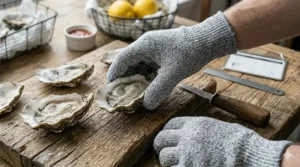
First 30 Minutes Setup: Start with a stable work surface at waist height—countertops are usually fine, but kitchen tables are often too low and force awkward angles that increase slip risk. Lay down a thick kitchen towel folded in quarters as your oyster holder; this provides cushioning and stability that a bare surface can’t match. Place a second towel for your cleaned oysters and a bowl for shells within arm’s reach so you’re not reaching across your workspace with a knife.
Critical First-Use Mistakes to Avoid: Never shuck while tired or distracted—oyster injuries spike during the last oysters of a session when concentration wanes. Don’t rush the glove break-in period; new cut-resistant gloves need 2-3 shucking sessions to conform to your hand shape and develop optimal grip. Resist the temptation to use your non-knife hand to “help” pry shells open; that hand’s only job is holding steady while the knife does the work.
Proper Knife Technique Matters More Than You Think: Even with Level 5 gloves, poor technique will eventually find a way to cause injury. Insert your knife at the hinge where shells meet, applying steady twisting pressure rather than forcing straight in. Keep your holding hand fingers below the oyster’s top edge—if the knife slips, it skips over the shell top rather than into your hand. When transitioning between oysters, set the knife down completely; holding it while reaching for the next shell is how accidents happen.
Real-World Shucking Scenarios: Matching Gloves to Your Needs
The Weekend Home Enthusiast: You’re shucking 12-24 oysters for dinner parties once or twice monthly. The NoCry Premium or Dowellife Level 5 gloves hit your sweet spot—enough protection for occasional use, not so expensive you worry about replacing them when they wear out. Keep them in your seafood tools drawer alongside your oyster knife, and throw them in the washing machine after each use.
The Beach House Summer Host: You’re entertaining at the shore with fresh oysters from local waters 3-4 times weekly during summer months. The OZERO or Rockland Guard options make sense because they tolerate frequent washing and saltwater exposure without falling apart. Buy two pairs so you always have clean gloves ready, and consider the complete Rockland set if you’re also equipping guest houses.
The Restaurant Oyster Bar Professional: You’re shucking 200+ oysters per service, five days a week. The Schwer SlicePro A9 or Dowellife Mesh gloves justify their higher cost through durability and reduced injury downtime. At this volume, a single preventable knife injury costs more in lost productivity than multiple pairs of premium gloves. Budget for quarterly replacement even for the highest-quality options under this intensity of use.
Understanding ANSI Cut Resistance Ratings: What the Numbers Really Mean
The ANSI/ISEA 105-2016 standard creates a nine-level scale (A1 through A9) measuring how much force a blade requires to cut through glove material. For oyster shucking, understanding these ratings helps you match protection to your actual risk level rather than just buying the highest number available. This standardized testing methodology ensures consistent performance measurement across different manufacturers.
Level 5 (the minimum recommended for oyster work) means the material withstands approximately 1,000-1,499 grams of blade force before breakthrough. Think of this as protection against accidental slips and shell edges—adequate for controlled environments where you’re paying attention and using proper technique. This level handles the sharp shell edges that cause most minor cuts during oyster handling.
Level A9 (the maximum available rating) withstands over 6,000 grams of cutting force. This represents protection against harder knife slips, sustained cutting pressure, or situations where concentration might waver during long commercial shifts. The practical difference between Level 5 and A9 becomes apparent when you’re tired, distracted, or working at speed under pressure.
What the ratings don’t capture is puncture resistance, which matters for oyster work because shells can have sharp points that concentrate force differently than a sliding blade. According to the ANSI Blog technical documentation on hand protection classification, gloves with steel wire or mesh construction typically handle puncture hazards better than HPPE fiber gloves at equivalent cut ratings—something to consider if you’re frequently working with particularly gnarly shell edges.
Common Mistakes When Buying Oyster Shucking Gloves
Mistake #1: Choosing Based on Cut Level Alone I see buyers constantly gravitating toward the highest ANSI rating without considering dexterity trade-offs. A Level A9 glove is overkill for home use if it’s so stiff you can barely feel the oyster—you’ll either stop wearing it or compensate with poor technique that defeats the purpose. Match protection level to your actual volume and risk profile.
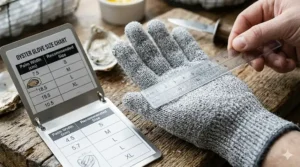
Mistake #2: Buying One Size Too Small Cut-resistant gloves need slight looseness for comfortable extended wear and easy on-off between oysters. If you’re between sizes, size up—a too-tight glove reduces circulation during long sessions and makes your hand fatigue faster. The exception is ultra-premium gloves that specify they run large; always check manufacturer sizing guides.
Mistake #3: Ignoring Food-Grade Certification Not all cut-resistant gloves qualify as food-safe. Industrial gloves may contain materials or treatments unsuitable for direct food contact. Look specifically for “food grade” or “FDA compliant” designations when buying gloves for shellfish work. This matters more than most people realize given how much oyster liquor soaks into glove material.
Mistake #4: Expecting Cut-Proof Rather Than Cut-Resistant No glove is genuinely cut-proof—the term is “cut-resistant” for a reason. Even A9-rated gloves can be cut through with sufficient force or sustained sawing pressure. Safety equipment reduces injury severity and likelihood but doesn’t eliminate the need for proper technique and attention.
Oyster Shucking Gloves vs Chainmail Gloves: Which Do You Actually Need?
Chainmail gloves (medieval-looking metal mesh) represent the extreme end of cut protection, and occasionally people ask if they’re necessary for oyster work. Here’s the practical breakdown: chainmail provides absolute maximum puncture and cut resistance but sacrifices nearly all dexterity and tactile feedback. They’re genuinely difficult to work in for precision tasks like knife-work.
For commercial meat cutting or industrial applications where you’re making repetitive cuts on large pieces, chainmail makes sense. For oyster shucking where you need to feel shell hinges and control a small knife precisely, modern Level 5-A9 synthetic gloves provide better protection-to-usability ratios. The one exception is if you have nerve damage or reduced hand sensation and need maximum protection because you can’t feel when you’re applying excessive pressure.
Price-wise, chainmail runs $50-$100+ for quality options versus $15-$45 for excellent synthetic cut-resistant gloves. Unless you’re specifically concerned about puncture injuries from broken shell shards, the synthetic options serve oyster shucking better at lower cost and better comfort.
Long-Term Cost Analysis: Budget vs Premium Gloves
Let’s look at real numbers over a two-year period for someone shucking oysters twice weekly:
Budget Route (NoCry at $18/pair): Year 1: Buy in January ($18), replace in July ($18) = $36 Year 2: Replace in January ($18), replace in July ($18) = $36 Two-year total: $72 for four pairs
Mid-Range Route (Dowellife Level 5 at $22/pair): Year 1: Buy in January ($22), replace in November ($22) = $44 Year 2: Replace in September ($22) = $22 Two-year total: $66 for three pairs
Premium Route (Schwer A9 at $30/pair): Year 1: Buy in January ($30) Year 2: Still using same pair Two-year total: $30 for one pair
The premium gloves cost less over time IF you’re using them regularly. For occasional use (monthly or less), budget gloves make more sense because you’ll likely lose them or damage them through poor storage before they wear out from actual use. The break-even point sits around 30-40 shucking sessions per year.
Frequently Asked Questions About Oyster Shucking Safety Gloves
❓ How often should I replace my oyster shucking gloves cut resistant?
❓ Can I use the same gloves for filleting fish and shucking oysters?
❓ Do I need to wear a glove on both hands while shucking?
❓ Will thick gloves make it harder to feel when the oyster knife finds the hinge?
❓ Are restaurant-grade oyster shucking gloves overkill for home use?
Conclusion: Choose the Right Protection Level for Your Shucking Style
After analyzing seven excellent options across different price points and protection levels, the path forward depends entirely on your actual oyster consumption and shucking frequency. For weekend enthusiasts hosting occasional oyster roasts, the Dowellife Level 5 or NoCry Premium gloves deliver reliable protection without breaking the bank. Restaurant professionals and serious home shuckers who work through dozens of oysters weekly should invest in the Schwer SlicePro A9 or Dowellife Mesh options—the durability and injury prevention justify the higher initial cost.
The key insight that ties everything together is this: cut-resistant gloves are insurance against the inevitable moment when your concentration slips. Even experienced shuckers have bad days, slippery oysters, or moments of distraction. The right gloves don’t just prevent minor cuts; they prevent the serious laceration that sends you to the emergency room instead of enjoying the oysters you worked to prepare.
Whatever protection level you choose, commit to wearing the gloves every single time you shuck. The most common oyster injury story starts with “I was just doing a few and didn’t think I needed my gloves…” Don’t be that person. Invest in quality protection, wear it consistently, and focus on enjoying excellent oysters without the emergency room drama.
✨ Don’t Miss These Exclusive Deals!
🔍 Take your oyster shucking safety to the next level with these carefully selected products. Click on any highlighted item to check current pricing and availability. These gloves will help you enjoy fresh oysters safely at home or in your restaurant!
Recommended for You
- 7 Best Butcher Cut Resistant Gloves That Protect Hands 2026
- 7 Best Metal Fabrication Cut Gloves That Actually Prevent Injuries (2026)
- 7 Best Glass Handling Cut Resistant Gloves – 2026
Disclaimer: This article contains affiliate links. As an Amazon Associate, I earn from qualifying purchases. If you purchase products through these links, we may earn a small commission at no additional cost to you.
✨ Found this helpful? Share it with your friends! 💬🤗
