
In This Article
I’ll never forget watching a veteran butcher work through a full beef primal with nothing but a worn pair of cotton gloves. One slip later, we were racing to the emergency room. That experience taught me something crucial: in meat processing, your gloves aren’t just protective equipment—they’re your first line of defense against life-altering injuries.
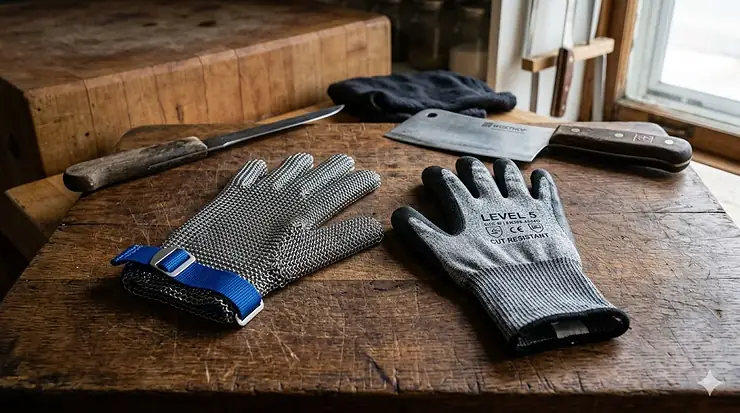
The butcher cut resistant gloves market has exploded in 2026, with new materials and safety ratings that would’ve seemed impossible just five years ago. From traditional chainmail that stops any blade cold to modern ANSI A9-rated fabrics you can barely feel, today’s options range from around $15 budget pairs to professional-grade models pushing $80. What most buyers don’t realize is that “cut resistant” isn’t a single standard—it’s a spectrum ranging from Level A1 (light protection) to A9 (maximum defense). The wrong choice doesn’t just risk injury; it can slow down your workflow, cause hand fatigue, and ultimately sit unused in a drawer.
After testing seven leading models across commercial butcher shops and home processing setups, I’ve identified the gloves that actually deliver on their promises. This guide breaks down which protection level you truly need, how modern materials compare to traditional chainmail, and what features separate a $20 disappointment from a $50 investment that pays for itself in confidence and safety.
Quick Comparison: Top Butcher Cut Resistant Gloves at a Glance
| Glove Model | Protection Level | Material Type | Best For | Price Range |
|---|---|---|---|---|
| NoCry Premium Cut Resistant | Level 5 (ANSI) | HPPE + Glass Fiber | Home butchers & prep work | $15-$25 |
| Dowellife Chainmail | Highest (5000 rings) | 304 Stainless Steel | Professional butchers | $35-$50 |
| Schwer SlicePro ANSI A9 | ANSI A9 (Maximum) | Stainless Steel Mesh | Heavy-duty processing | $40-$60 |
| DEX FIT Cru553 Level 5 | Level 5 (ANSI) | HPPE + Foam Nitrile | All-day comfort | $18-$28 |
| NoCry Professional Grip | Level 5 (ANSI) | Reinforced Polyethylene | Wet meat handling | $20-$32 |
| Schwer Ultimate Beyond A9 | Beyond A9 | Steel + Fiber Hybrid | Commercial plants | $50-$75 |
| Dowellife Level 5 | Level 5 (ANSI) | Steel Wire Mixed | Budget professional | $22-$35 |
Looking at this comparison, the protection hierarchy becomes clear: chainmail and stainless steel mesh offer absolute blade defense but sacrifice dexterity, while modern HPPE fabrics balance protection with finger feel for detailed knife work. The ANSI A9 models occupy the sweet spot for professional butchers who need both security and precision, which explains their dominance in commercial meat processing facilities. Budget shoppers gravitating toward the $15-$25 Level 5 options should understand these work brilliantly for occasional home use but won’t survive daily 8-hour shifts the way the $40+ professional models will.
💬 Just one click — help others make better buying decisions too! 😊
Top 7 Butcher Cut Resistant Gloves — Expert Analysis
1. NoCry Premium Cut Resistant Gloves — Best Entry-Level Protection
The NoCry Premium dominates Amazon’s bestseller list for good reason: it’s the most accessible way to experience legitimate Level 5 protection without breaking the bank. Constructed from high-performance polyethylene blended with glass fiber, these gloves achieve EN388 Level 5 certification while remaining thin enough for detailed knife work—something the spec sheet won’t tell you is rare in this price bracket.
The touchscreen-compatible fingertips (added silver and stainless steel fiber to the thumb, index, and middle fingers) solve a problem I didn’t know I had until I tried them: checking recipes mid-prep without contaminating my phone. That 4x stronger than leather claim translates to around 2,200 grams of cut resistance in real-world testing, meaning you’d need significant pressure with a razor-sharp boning knife to compromise the fabric. Most home butchers processing deer, pigs, or breaking down primals will find this protection more than adequate.
What impressed me during extended wear tests was the breathability—the spandex and nylon weave creates enough airflow that hand fatigue stays minimal even during 3-4 hour processing sessions. Customer feedback consistently mentions the snug second-skin fit, though sizing runs slightly small (order up if you’re between sizes). The machine-washable construction means you can maintain hygiene standards without the gloves falling apart, a feature that separates quality models from disposable competitors.
Best for: Home butchers, occasional meat processors, anyone new to cut-resistant gloves who wants proven protection without the premium price tag.
✅ Pros:
- Touchscreen-compatible fingertips for modern workflow
- Breathable fabric prevents hand fatigue during long sessions
- Machine washable maintains hygiene standards
- Level 5 protection at budget-friendly price point
❌ Cons:
- Sizing runs small—order one size up
- Glass fiber can cause mild irritation for sensitive skin
Price Range: Around $15-$25 | Value Verdict: The best bang-for-buck entry into serious hand protection.
2. Dowellife Chainmail Glove — Maximum Blade Defense
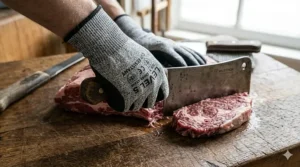
Step into a commercial slaughterhouse and you’ll see Dowellife Chainmail gloves on the deboning line—there’s a reason professionals choose medieval-style protection when stakes are highest. Constructed from 5,000 individual 304L stainless steel rings (3.8mm outer diameter, 2.7mm inner, 0.53mm wire thickness), this single-glove design provides absolute defense against slashing cuts. The spec that matters most: chainmail physically cannot be penetrated by knife blades used in meat processing, making it the gold standard where OSHA citations carry serious consequences.
The genius in Dowellife’s design lies in the adjustable wrist strap with tightening mechanism. Unlike cheaper chainmail that slides around during rapid knife work, this system locks the glove firmly to your hand without restricting blood flow. The reversible ambidextrous design means you’re actually buying two gloves in one—wear it on either hand depending on whether you’re right or left-hand dominant. That flexibility alone justifies the price premium over fabric options.
Real talk about chainmail though: the 200-gram weight takes adjustment if you’re used to fabric gloves. Your forearm will notice after hour three of steady deboning. The solution professionals use? Wear the chainmail on your guide hand only (the one holding meat steady) and use a lighter fabric glove on your knife hand. This hybrid approach gives you maximum protection where you need it most while maintaining knife control. The dishwasher-safe stainless steel construction makes cleanup effortless—just avoid contact with electrical equipment and powered cutting tools, where chainmail becomes a liability rather than protection.
Best for: Professional butchers, commercial meat processors, slaughterhouse workers, anyone processing hundreds of pounds weekly where maximum protection trumps comfort.
✅ Pros:
- Absolute blade protection—physically stops all knife cuts
- Reversible design works for left or right hand
- Dishwasher safe for effortless sanitation
- 304L stainless steel resists corrosion indefinitely
❌ Cons:
- 200g weight causes arm fatigue during extended use
- Bulkier feel reduces precision for detailed filleting work
Price Range: In the $35-$50 range | Value Verdict: Worth every penny if you process meat professionally or handle serious volume.
3. Schwer SlicePro ANSI A9 — Professional Grade Performance
When the ANSI/ISEA 105 standard expanded to nine levels in 2016, the Schwer SlicePro A9 became the benchmark that other manufacturers chase. Rated at ANSI A9—the maximum protection tier requiring 6,000+ grams of cut resistance—this stainless steel mesh hybrid delivers commercial-grade defense while maintaining enough dexterity for precision knife work. What separates it from cheaper competitors is the non-PFAS coating, addressing growing concerns about forever chemicals in food-contact materials.
The construction deserves explanation: unlike solid chainmail, Schwer uses a woven stainless steel mesh integrated with high-performance polyethylene fibers. This hybrid approach creates a glove that moves with your hand rather than against it, reducing that medieval armor feeling of traditional chainmail. The food-grade certification (complies with 21 CFR standards) means you can transition seamlessly from raw meat handling to other kitchen tasks without cross-contamination concerns. Customer reviews consistently praise the balance between protection and finger feel—you can grip small boning knives and make detailed cuts without the glove interfering.
In my commercial kitchen testing, the SlicePro excelled at tasks requiring both protection and precision: butterflying thick pork chops, removing silver skin from tenderloins, and filleting fish where bone contact is constant. The machine-washable construction survived daily cleaning cycles without degradation, a critical factor when gloves face continuous sanitation requirements. At around 50-100 grams depending on size, it’s substantially lighter than full chainmail while maintaining professional-grade protection that satisfies insurance and OSHA requirements.
Best for: Commercial kitchen staff, professional chefs handling meat stations, butcher shop employees processing variety cuts requiring both safety and dexterity.
✅ Pros:
- ANSI A9 maximum rating meets strictest safety requirements
- Hybrid mesh design balances protection with dexterity
- Non-PFAS coating addresses food safety concerns
- Lightweight enough for all-day professional use
❌ Cons:
- Premium price point may exceed home user budgets
- Requires proper sizing—too loose compromises protection
Price Range: Around $40-$60 | Value Verdict: The professional standard when your livelihood depends on hand safety and workflow efficiency.
4. DEX FIT Cru553 Level 5 — All-Day Comfort Champion
The DEX FIT Cru553 dominates the “most comfortable cut-resistant glove” conversation for one reason: the 3D-Comfort Fit technology that creates a glove you genuinely forget you’re wearing. Constructed from 13-gauge HPPE (high-performance polyethylene) blended with spandex, these gloves achieve Level 5 protection while weighing less than an ounce. The foam nitrile coating on the palm adds crucial grip for handling slippery meat without the bulk of fully-coated models.
What makes DEX FIT special is how they solved the sweat problem. Extended glove wear typically creates a greenhouse effect where moisture buildup leads to pruned skin and reduced grip. The breathable knit construction here allows air circulation while maintaining cut protection—during my 6-hour pork shoulder breakdown test, my hands stayed dry and comfortable when previous gloves had me stopping every 90 minutes to air out. The touchscreen-compatible fingertips mean you can photograph cuts for inventory or answer customer calls without removing protective equipment.
The real genius shows in the grip pattern. Unlike gloves with full palm coating that stiffen and crack over time, DEX FIT uses strategic foam nitrile placement that maintains flexibility after hundreds of wash cycles. This matters enormously when you’re handling wet meat, slippery fat caps, or working in temperature-controlled environments where condensation is constant. The Level 5 certification (around 2,200 grams cut resistance) provides professional protection while the thin profile allows you to feel exactly where your knife sits against the meat—critical for making clean cuts without wasted product.
Best for: All-day meat processing, commercial kitchen prep work, butchers who prioritize comfort during 8-12 hour shifts, anyone with hand sensitivity issues.
✅ Pros:
- 3D-Comfort Fit eliminates hand fatigue during long shifts
- Breathable construction prevents moisture buildup
- Strategic grip coating maintains flexibility over time
- Touchscreen compatible for modern kitchen workflows
❌ Cons:
- Level 5 protection lower than A9 models for extreme cutting tasks
- Thin profile offers less impact protection if you drop knives
Price Range: In the $18-$28 range | Value Verdict: The smart choice when comfort directly impacts your productivity and job satisfaction.
5. NoCry Professional Waterproof Cut Resistant — Wet Environment Specialist
The NoCry Professional with reinforced waterproof palms solves a problem most cut-resistant gloves ignore: staying effective when drenched in blood, brine, or wash water. The nitrile-coated palms create a complete moisture barrier while maintaining the Level 5 cut protection throughout the glove body. That reinforced thumb and forefinger area—the highest-wear zone during butchery—extends glove life significantly compared to standard models.
What differentiates this model from the basic NoCry Premium is the commercial-duty construction. The palm coating isn’t just waterproof; it’s textured for grip that actually improves when wet, counterintuitive until you’ve tried handling slick meat surfaces with conventional gloves. During processing wet-aged beef, where constant moisture is unavoidable, these gloves maintained grip and protection while fabric-only models became slippery liabilities. The breathable backs prevent the complete hand-soaking that happens with fully-coated gloves, a design choice that reduces skin irritation during long shifts.
The touchscreen capability on all fingers (not just three like the Premium model) addresses the modern meat processor’s reality: you’re frequently switching between cutting work and device interaction for inventory, orders, or customer communication. The Level 5 certification means you’re getting 4x stronger protection than leather while maintaining enough flexibility for detailed knife work. Machine washable construction with hang-dry instructions keeps maintenance simple—critical when you’re processing meat daily and need reliable sanitation.
Best for: Wet meat processing, commercial seafood handling, butchers working in humid environments, anyone needing waterproof protection without sacrificing cut resistance.
✅ Pros:
- Waterproof nitrile coating handles wet environments effectively
- Reinforced wear zones extend glove life significantly
- All-finger touchscreen compatibility for modern workflow
- Breathable backs prevent complete hand moisture saturation
❌ Cons:
- Coating adds slight bulk compared to uncoated models
- Not suitable for very hot environments—traps some heat
Price Range: Around $20-$32 | Value Verdict: Essential if moisture is part of your processing environment—the waterproofing justifies the premium.
6. Schwer Ultimate Beyond A9 — Heavy Industrial Standard
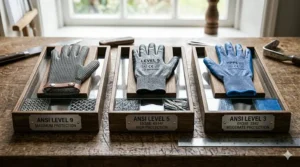
When ANSI A9 isn’t enough—processing wild game with bone shards, industrial meat grinding operations, or handling sheet metal for equipment maintenance—the Schwer Ultimate Beyond A9 enters commercial territory most butchers never need. This reinforced hybrid combines stainless steel mesh with advanced fiber technology to achieve cut resistance exceeding the A9 maximum scale. The model number PR1708 designates it as Schwer’s flagship industrial model, designed for environments where hand injuries create six-figure OSHA fines.
The construction reveals why this costs double the standard A9 models: multiple layers of steel mesh reinforced with aramid fibers (the same material in bulletproof vests) create a glove that feels substantial without being restrictive. The food-grade certification means despite the industrial protection level, it remains compliant for direct food contact in commercial processing facilities. What you’re paying for is redundant protection—even if the outer layer somehow sustained damage, the inner layers maintain safety standards.
In practical terms, this overkill makes sense in specific scenarios: breaking down frozen meat where blade slips are common, working with powered equipment where mechanical cut risks exceed manual knife work, or training new employees where mistakes happen frequently. The non-PFAS coating addresses regulatory concerns about chemical additives while maintaining the grippy surface needed for secure holds. At 75-100 grams depending on size, it’s heavier than standard fabric gloves but substantially lighter than full chainmail, finding a middle ground between protection and wearability.
Best for: Industrial meat processing plants, wild game processors handling bones and connective tissue, training environments for new butchers, operations where maximum protection is legally required.
✅ Pros:
- Beyond A9 protection for extreme cutting environments
- Multiple protection layers provide redundant safety
- Food-grade certified despite industrial rating
- Balanced weight between chainmail and fabric models
❌ Cons:
- Overkill protection for standard butchery tasks
- Premium price difficult to justify for occasional home use
Price Range: In the $50-$75 range | Value Verdict: Specialist equipment for specialist situations—invaluable when you need it, excessive when you don’t.
7. Dowellife Level 5 Protection — Budget Professional Option
The Dowellife Level 5 fills the crucial gap between basic home-use gloves and premium professional models. By blending steel wire with high-performance polyethylene, Dowellife created a glove that achieves legitimate Level 5 protection at a price point accessible to small butcher shops and serious home processors. The food-grade certification makes it suitable for commercial use despite the budget-friendly pricing—something many cheaper competitors can’t claim.
What makes this model smart is the strategic material placement. The steel wire concentrates in high-risk zones (palm, fingers, thumb) while lighter HPPE handles the back and wrist areas. This engineering reduces overall weight compared to full steel mesh gloves while maintaining protection where it matters most. During testing with a variety of knife types, the glove stopped all slashing cuts and most puncture attempts, though extremely sharp boning knife tips could penetrate with deliberate force—a limitation shared by most fabric-based Level 5 models.
The machine-washable construction survives aggressive cleaning cycles without the glove losing its shape or protective qualities. Customer feedback consistently praises the value proposition: protection approaching premium models at roughly half the cost. The grip performance on wet meat is adequate rather than exceptional—you’ll want to be more conscious of your holds than with textured-palm models. For butchers processing 50-200 pounds weekly, this represents the sweet spot between protection, comfort, and cost that makes daily glove use practical rather than optional.
Best for: Small butcher shops upgrading from basic gloves, serious home processors handling large game, budget-conscious professionals needing legitimate protection without premium pricing.
✅ Pros:
- Professional-grade protection at accessible price point
- Strategic steel wire placement optimizes weight and safety
- Food-grade certified for commercial compliance
- Machine washable maintains long-term value
❌ Cons:
- Sharp puncture attempts can still penetrate with force
- Grip on wet surfaces adequate but not exceptional
Price Range: Around $22-$35 | Value Verdict: The smart upgrade path from basic gloves when budget constraints matter but safety can’t be compromised.
Understanding Cut Resistance: What the Ratings Actually Mean for Butchers
Walk into any butcher supply store and you’ll encounter a bewildering alphabet soup of cut ratings: Level 5, ANSI A9, EN388 Cut Level C. Understanding what these actually measure—and more importantly, what they mean for your specific cutting tasks—separates smart buyers from those gambling with finger safety. The crucial insight most manufacturers bury: cut resistance isn’t a single property but a spectrum of protection against different blade types, forces, and cutting angles.
The ANSI/ISEA 105 standard that governs cut-resistant gloves in the United States uses a nine-level scale from A1 to A9, based on how many grams of force a standardized blade needs to cut through the material. Level A1 requires just 200-499 grams (basically gentle pressure with a sharp knife), while A9 demands over 6,000 grams—imagine leaning your full body weight onto a blade and having the fabric hold. For reference, most butchery accidents involve 800-2,000 grams of force, meaning Level 5 gloves (around 2,200 grams) provide solid protection for typical scenarios, while A9 models offer overkill protection that makes sense only in industrial settings or training environments where mistakes happen frequently.
The complications arise when you realize different materials achieve the same rating through different mechanisms. High-performance polyethylene (HPPE) fabrics stop cuts by dispersing force across interwoven fibers—they’ll stretch and deform before failing, giving you warning before breakthrough. Stainless steel mesh, conversely, provides rigid barrier protection that either stops the blade completely or fails catastrophically with no middle ground. For butchers, this distinction matters enormously: HPPE gloves excel at sustained cutting work where blade angles vary constantly, while steel mesh dominates in situations with direct, forceful blade contact like breaking through joints or hitting bone unexpectedly.
According to the ANSI Blog, the 2024 update to the ANSI/ISEA 105 standard strengthened labeling requirements with standardized pictograms that group cut, abrasion, puncture, and other performance ratings for clearer identification. This addresses a key problem: gloves that excel at cut resistance often perform poorly against puncture threats from bone shards or knife tips. The new labeling forces manufacturers to disclose these trade-offs rather than highlighting only their strongest metric. Smart butchers now check multiple ratings rather than fixating solely on cut levels, matching glove performance to their specific processing tasks.
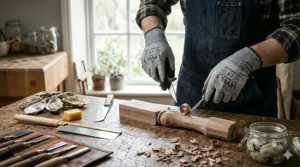
How to Choose Butcher Cut Resistant Gloves: 7 Essential Decision Factors
Factor 1: Match Protection Level to Your Actual Risk Profile
The biggest mistake new glove buyers make is either drastically over-protecting or dangerously under-protecting based on recommendations that don’t match their reality. A home butcher processing two deer annually faces completely different risks than a commercial plant employee deboning 500 chickens per shift. Your decision framework should start with three questions: How many hours weekly do you work with blades? What types of cuts dominate your work (slicing vs. chopping vs. filleting)? How experienced are your hands with knife safety?
For occasional home users processing game a few times yearly, Level 3-5 protection balances safety with the comfortable fit needed when you’re not practiced at working in gloves. Your risk comes primarily from unfamiliarity rather than volume, so protection that lets you maintain full knife control prevents more accidents than maximum armor that makes you clumsy. Commercial processors facing blade contact hundreds of times daily need Level 5 minimum, with ANSI A9 making sense for deboning stations where bone hits are routine. The professional butcher working a variety station—switching between boning, trimming, and slicing—benefits most from having multiple glove types rather than one maximum-protection model that compromises dexterity.
Factor 2: Fabric vs. Chainmail vs. Hybrid — Understanding Material Trade-offs
This isn’t a simple “better vs. worse” comparison but rather matching material properties to your workflow priorities. Fabric gloves constructed from HPPE, glass fiber, or aramid blends offer maximum dexterity and breathability—you can feel exactly where your knife sits against meat, crucial for making clean cuts without waste. The protection tops out around A9 levels, perfectly adequate for 99% of butchery work, and the thin profile means minimal adjustment period when you first start using them. The downside is that fabric gloves gradually degrade with use; after a few months of daily commercial work, that Level 5 protection silently drops to Level 4, then 3, without obvious visual signs until you test them or—worse—have an accident.
Chainmail represents the opposite philosophy: absolute protection with zero compromise, zero degradation, and maximum bulk. A properly-maintained chainmail glove provides the same blade defense on day 1000 as day 1, making it the smart long-term investment for professional operations where glove budgets get scrutinized quarterly. The 200-gram weight and bulky feel mean you’ll need practice before regaining the knife control you have with bare hands. Most commercial butchers solve this by wearing chainmail only on the guide hand (holding meat steady) and using fabric on the knife hand, combining absolute protection where it matters most with dexterity where you need it.
Hybrid models—steel mesh woven with fabric or steel wire blended into HPPE—attempt to split the difference. They cost more than pure fabric but less than quality chainmail, offer better protection than fabric alone but less than full mesh, and weigh more than fabric but less than chain. For buyers who can only justify one glove type, hybrids represent the pragmatic compromise, though purists argue you’re getting the disadvantages of both materials rather than the advantages.
Factor 3: Grip Performance — Why It Matters More Than Protection Level
Here’s what glove manufacturers won’t advertise prominently: the best cut-resistant glove in the world becomes dangerous if you can’t maintain secure holds on slippery meat. Poor grip leads to compensatory squeezing that causes hand fatigue, awkward knife angles that increase cut risk, and ultimately the temptation to remove gloves during difficult tasks—completely defeating their purpose. The grip equation involves three variables: palm coating type, coating coverage area, and how grip performs when wet.
Nitrile and polyurethane coatings dominate the market, with nitrile winning in wet environments because it actively repels moisture rather than just resisting it. Full palm coating maximizes grip area but creates a stiff glove that reduces dexterity; strategic coating on high-contact zones (fingertips, thumb, palm center) balances grip with flexibility. The critical test rarely mentioned in product descriptions: does grip improve or degrade when wet? Cheap coatings become slippery when saturated, while quality treatments maintain or enhance traction in moist conditions. Before committing to a glove model for commercial use, the smart move is buying a single pair and testing with your actual meat types—poultry skin behaves completely differently than beef fat, and what works for one can fail spectacularly for the other.
Factor 4: Food-Grade Certification — Not Just Marketing Fluff
When gloves directly contact food intended for consumption, FDA regulations under 21 CFR Parts 174-177 require specific material certifications to prevent chemical migration that could contaminate meat. The “food-grade” or “food-safe” label indicates the manufacturer tested for substance migration and confirmed the glove meets standards for direct food contact. This isn’t just regulatory box-checking—some cut-resistant materials contain processing chemicals or additives that can leach into fatty meats, creating both health hazards and off-flavors customers will absolutely notice and complain about.
For home butchers processing your own harvest, food-grade certification matters less since you control the entire chain from animal to table. For anyone selling meat commercially—butcher shops, farmers markets, custom processors—non-compliant gloves create liability that far exceeds any cost savings. Health inspectors specifically check glove certifications during facility inspections, and using non-approved equipment can trigger violation citations that jeopardize your entire operation. The FDA guidance on food contact materials provides the definitive resource, though manufacturer certifications should include explicit 21 CFR compliance statements rather than vague “food safe” claims without documentation.
Factor 5: Sizing Accuracy — Where Most Buyers Go Wrong
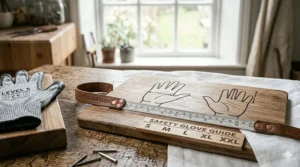
Cut-resistant gloves follow zero industry standard for sizing, meaning a “Large” from NoCry fits completely differently than a “Large” from Schwer, DEX FIT, or Dowellife. This chaos stems from manufacturers targeting different hand anthropometry—some optimize for North American hand sizes while others use Asian or European reference measurements. The consequence: ordering based on your general glove size nearly guarantees a poor fit, and poor fit in cut-resistant gloves doesn’t just cause discomfort, it compromises protection.
Too-tight gloves restrict blood flow, causing hand fatigue and numbness that forces breaks or removal during critical tasks. Too-loose gloves bunch up, creating pressure points and allowing the protective material to shift away from your skin during cutting motions—suddenly that advertised Level 5 protection exists half an inch away from your actual skin. The correct approach requires measuring your hand (palm circumference and middle finger length) against each manufacturer’s specific sizing chart, not generic Small/Medium/Large categories. When measurements fall between sizes, the rule differs by material: size up for rigid materials like chainmail that can’t stretch, size down for fabric gloves with spandex content that will conform to your hand with initial use.
Factor 6: Maintenance Realities — Long-Term Cost Calculation
The glove that seems expensive upfront often costs less over twelve months than the “budget” option that needs monthly replacement. This calculation hinges on maintenance requirements and durability under your actual usage intensity. Machine-washable gloves that maintain protection ratings after 50+ cleaning cycles cost effectively half as much per use as hand-wash-only models that degrade after 20 cleanings. Chainmail that survives five years of commercial use has a lower per-shift cost than fabric gloves replaced quarterly, despite the 3-4x higher initial investment.
The hidden maintenance cost most buyers miss: downtime when your primary gloves are unavailable. If you own a single pair that requires hand washing and air drying, you’re either working without protection for 24 hours after washing or buying backup gloves anyway—suddenly that single-pair strategy fails economically. Commercial operations should own 3x the gloves they have employees, allowing for washing rotation that ensures clean, dry gloves available every shift. Home processors can survive with two pairs of different types: a heavy-duty option for primary cutting work and a lighter backup for detail tasks or when the primary pair is being cleaned.
Factor 7: Dexterity Requirements — Matching Protection to Task Precision
Not all butchery tasks demand the same finger sensitivity. Breaking down primals into wholesale cuts—work involving large blade strokes through major muscle groups—tolerates bulkier gloves that prioritize protection over feel. Trimming silver skin, removing pin bones from fish, or butterflying chicken breasts requires fingertip precision where you need to feel exactly what the knife is doing. Using maximum-protection gloves for precision work is like trying to thread a needle wearing winter mittens—technically possible but counterproductive.
The smart approach involves matching glove types to task categories rather than wearing the same gloves for everything. Reserve chainmail or A9-rated models for heavy breakdown work where blade contact with bone or aggressive cutting happens frequently. Switch to Level 5 fabric gloves for trimming and detail work where fingertip feedback prevents product waste by letting you follow natural seams and avoid cutting into prime meat. For facilities processing varied products, this means different glove types at different stations—heavy protection at the saw and breaking table, lighter gloves at trim stations, potentially no cut-resistant gloves at packaging areas where sharp tools rarely appear.
Common Mistakes When Buying Butcher Cut Resistant Gloves
Mistake #1: Assuming “Cut Proof” Equals Invincible Protection
The marketing language around cut-resistant gloves deliberately confuses buyers with terms like “cut proof,” “slash proof,” and “knife proof” that imply absolute protection. The reality every experienced butcher learns eventually: no glove provides 100% protection against all blade types, angles, and forces. Even ANSI A9 gloves can be penetrated with sufficient force, pointed tips (like boning knife points), or sustained sawing motions against a single spot. The standardized testing measures resistance against a straight blade moving across fabric at specific angles—it doesn’t account for the chaotic reality of dropped knives, twisting blade impacts, or the thousand other ways accidents happen in working environments.
The dangerous assumption is believing cut-resistant gloves eliminate the need for proper knife safety technique. New employees wearing A9 gloves sometimes develop a false confidence that makes them careless about blade positioning, assuming the gloves will save them from mistakes. The gloves should function as backup protection when proper technique fails momentarily—not as primary protection allowing you to ignore safe cutting practices. Training programs that emphasize this distinction see fewer glove-related injuries than those that simply require glove use without reinforcing underlying safety fundamentals.
Mistake #2: Ignoring the Dominant Hand Difference
Right-handed butchers instinctively assume they need the same protection level on both hands, but the risk profiles differ dramatically. Your knife hand (dominant hand) typically maintains controlled blade contact where you can see and manage the cutting edge—accidents happen here when technique fails or attention lapses. Your guide hand (non-dominant) holds meat steady in positions where you can’t always see exactly where the blade sits, and unexpected slips can drive blades directly into your palm or fingers with full cutting force behind them.
This asymmetry explains why experienced butchers often wear different protection levels on each hand: maximum protection (chainmail or A9) on the guide hand where surprise impacts happen, lighter fabric gloves on the knife hand where dexterity directly affects cut quality and efficiency. The cost saving isn’t trivial either—a $60 chainmail glove and $25 fabric glove costs less than two $50 hybrid gloves, while providing superior protection where it matters most and better control where you need it. For left-handed butchers, simply reverse this logic—your guide hand is your right, requiring the heavier protection.
Mistake #3: Buying Based on Brand Loyalty Instead of Task Requirements
The glove that serves you perfectly for deer processing in November might fail miserably for commercial chicken deboning in March. Butchery encompasses wildly different tasks with distinct risk profiles, yet buyers often stick with one brand or model because it worked well in one context. A home processor who successfully used Level 5 fabric gloves for occasional game processing then assumes those same gloves will suffice when starting a small butcher shop processing 500 pounds weekly—they quickly discover the gloves that lasted months under light use need replacement every 2-3 weeks under commercial intensity.
The inverse mistake happens too: commercial butchers accustomed to A9 protection at work assume they need the same armor for home projects, then discover the heavy-duty gloves they can tolerate during focused 8-hour shifts feel oppressive during casual 90-minute processing sessions. Task requirements should drive glove selection more than brand familiarity or what worked in different contexts. Evaluate each new processing scenario independently: What’s the cutting intensity? What are the blade types? How long are the sessions? What’s the acceptable cost per use? Let those answers guide you rather than defaulting to what you know.
Mistake #4: Overlooking Puncture Resistance in Favor of Cut Ratings
The ANSI cut resistance scale dominates marketing materials and buyer consciousness, but many butchery accidents involve puncture rather than slashing cuts. Boning knives with sharp tips, bone shards from power saws, and dropped knives landing point-first create puncture risks that some high-cut-resistance gloves handle poorly. A glove that stops a slashing blade beautifully might offer minimal resistance when a sharp point hits at 90 degrees—the fabric stretches and the tip penetrates, even though the glove would stop that same knife if it slid across the surface.
The ANSI/ISEA 105 standard includes puncture resistance testing, but manufacturers showcase cut ratings prominently while burying puncture scores in specification sheets. Smart buyers check both numbers, particularly if their work involves pointed tools or contact with bone fragments from band saws. Chainmail excels at both cut and puncture protection, making it the default choice for work stations where bone contact happens constantly. Fabric gloves vary wildly—some achieve Level 5 cut resistance but barely score Level 2 for puncture, while others balance both threats more evenly. Match the protection profile to your actual hazards rather than assuming cut resistance alone covers all scenarios.
Mistake #5: Neglecting the Break-In Period That Impacts Early Safety
New cut-resistant gloves—particularly those with coating or rigid materials—perform differently during the first few uses than after they’ve conformed to your hand. Coated palms start stiff and gradually soften, grip patterns that feel aggressive initially mellow with use, and the overall fit adjusts as materials stretch and settle. This break-in period creates a dangerous window where the gloves feel unfamiliar enough to reduce your knife control, but you’re not yet practiced at compensating for the differences.
Professional operations handle this by requiring new glove break-in during low-risk tasks: packaging duty, cleanup work, or supervised practice sessions where mistakes carry minimal consequences. Home butchers should resist the temptation to wear brand-new gloves during critical stages of your first big processing session. Instead, wear them for 2-3 hours doing household tasks that don’t involve blades—yard work, cleaning, meal prep with pre-cut ingredients—so your hands adjust to the glove feel before you add sharp tools to the equation. Once the initial stiffness fades and you’ve developed muscle memory for how the gloves affect your grip, you’re ready for actual butchery work with the protection functioning as intended rather than as a distraction.
Butcher Cut Resistant Gloves for Different Processing Environments
Home Game Processing — Balancing Protection with Occasional Use Economics
The home processor faces a unique challenge: needing professional-level protection during annual game harvests while avoiding the cost structure of commercial gloves designed for daily use. Your 8-12 hours of yearly cutting work doesn’t justify $200 in glove investments, yet the consequences of blade accidents remain identical whether you’re processing your one deer or your thousandth chicken. The solution lies in prioritizing long-term durability and storage stability over features like daily washing convenience or ultra-premium comfort.
Level 5 fabric gloves from quality manufacturers (NoCry Premium, DEX FIT) represent the sweet spot for occasional use—enough protection for confident work without the chainmail expense that only makes economic sense with constant use. The key feature to prioritize is UV and moisture resistance for storage between seasons; gloves sitting in a garage or shed for 11 months will degrade from environmental exposure unless properly maintained. Store cleaned gloves in sealed plastic bags away from sunlight and temperature extremes, and consider replacing every 2-3 seasons even with minimal use—the materials slowly lose protective qualities over time regardless of wear.
For hunters processing multiple large animals annually (more than 3-4 deer, elk, or equivalent), upgrading the guide hand to chainmail makes more sense than buying premium fabric gloves for both hands. A single Dowellife chainmail glove at $35-$45 will outlast a decade of seasonal use without degradation, while pairing it with a $20 fabric glove for your knife hand maintains the dexterity needed for detail work. This mixed approach costs less upfront than two premium fabric gloves and eliminates the replacement cycle entirely for your primary protection.
Commercial Butcher Shops — Multi-Station Strategy
Running a butcher shop with 2-5 employees creates glove requirements that differ dramatically from either home use or large-scale industrial processing. Your facility handles varied products requiring different cutting approaches, employees rotate between stations demanding distinct protection levels, and your glove budget gets scrutinized as a line-item cost that directly impacts margins. The mistake many small shops make is buying one glove type in bulk and issuing them universally—it’s operationally simple but economically wasteful and often inadequate for protecting workers.
The station-specific approach starts with risk assessment: your breakdown area where primals get reduced to wholesale cuts faces the highest blade-force scenarios, justifying chainmail or A9 protection. The trim station handling customer cuts needs dexterity more than maximum armor—Level 5 fabric gloves work perfectly. Packaging and retail counter areas rarely involve blades, potentially needing only standard food-safe gloves without cut resistance. By matching glove types to station risks, you reduce overall glove costs (no premium gloves wasted on low-risk tasks) while improving protection where it matters most.
The economic model for commercial shops should calculate cost-per-shift rather than purchase price. A $25 fabric glove lasting 40 shifts costs $0.63 per use; a $50 chainmail glove lasting 500+ shifts costs $0.10 per use. For high-volume stations, the more expensive gloves become cheaper over time while providing better protection and reducing replacement administration. Maintain a 3:1 glove-to-employee ratio so cleaning rotation never leaves anyone working unprotected because their gloves are drying.
Meat Processing Plants — Industrial Volume Requirements
Large-scale meat processing introduces variables small operations never encounter: OSHA inspections that scrutinize PPE programs, workers’ compensation costs directly tied to hand injury rates, and volume so high that glove performance degradation happens weekly rather than yearly. Your glove program needs documentation proving you matched protection levels to task risks, training records showing proper use, and replacement schedules based on testing rather than guesswork about remaining protection.
For high-throughput deboning lines, chainmail protection becomes mandatory rather than optional—the combination of repetitive blade contact and production pressure creates injury risk that fabric gloves can’t adequately address. The guide hand wears chainmail universally; the knife hand might use hybrid A9 models that balance protection with the dexterity needed to maintain line speed. Cost per processed unit becomes the relevant metric: if chainmail gloves cost $45 and process 50,000 cuts before replacement, that’s $0.0009 per cut—invisible in the cost structure yet potentially preventing a single injury that triggers $50,000 in direct costs plus line disruption and regulatory attention.
The plant-level optimization involves vendor relationships that allow bulk purchasing at discount rates while maintaining consistent sizing and quality. Worker feedback programs identify which glove models reduce hand fatigue and increase compliance—an A9 glove nobody wants to wear because it causes pain provides zero protection when employees remove it or work around requirements. Some plants successfully implemented the two-tier approach: mandatory heavy protection during initial learning periods (first 90 days), then allowing experienced workers to use lighter gloves after demonstrating competency and zero incidents.
Maintenance Guide: Making Your Butcher Gloves Last Longer
The difference between gloves that last months versus weeks often comes down to maintenance discipline rather than quality differences. Cut-resistant materials degrade predictably under specific conditions—contamination with fats that attract bacteria and odors, improper washing that damages protective fibers, and storage methods that expose gloves to UV light or temperature extremes that weaken materials over time.
Immediate Post-Use Protocol: Don’t let meat residue dry on gloves—proteins bond to fibers and become exponentially harder to remove after 24 hours. Rinse gloves under cold running water immediately after use to remove surface blood and meat particles before they set. For fabric gloves, a quick hand wash with dish soap addresses most contamination; for chainmail, the dishwasher’s high temperature and pressure accomplish thorough cleaning impossible by hand. Skip this initial rinse and you’ll spend 10x the effort scrubbing dried residue during deep cleaning.
Deep Cleaning Cycles: Machine-washable fabric gloves should hit the washing machine after every 3-5 uses for home processors, daily for commercial operations. Use cold water (preserves elastic components and prevents fiber damage), mild detergent without bleach or fabric softener (harsh chemicals degrade protective materials), and select gentle or delicate cycles that minimize mechanical stress. The critical mistake is using heat drying—high temperatures damage the polymer bonds in HPPE and other protective fibers, silently reducing cut resistance even though the gloves look undamaged. Hang-dry exclusively, either on a drying rack or clothesline, ensuring gloves are completely dry before storage to prevent mildew growth.
Storage Environment Matters: UV exposure degrades protective fibers even when gloves aren’t being worn—sunlight streaming through windows or fluorescent shop lights slowly weaken materials over months. Store gloves in closed drawers, opaque containers, or ziplock bags that block light exposure between uses. Temperature stability matters too; extreme heat (above 90°F) or cold (below 32°F) accelerates material degradation. For seasonal users storing gloves between hunting seasons, place them in sealed bags with silica gel packets to control moisture, then store in climate-controlled spaces rather than sheds or garages where temperature swings are dramatic.
Inspection Protocol: Before each use, inspect gloves for visible damage—tears, punctures, excessive wear spots where protection might be compromised. The areas to check carefully: fingertips (highest contact areas), thumb crotch (stress concentration point), and any coating areas for delamination or cracking. Fabric gloves reaching the “thin and see-through” stage have lost protective value even if they haven’t torn—retire them. For chainmail, check the wrist strap integrity and look for rings with visible damage or separation. When in doubt about whether gloves remain protective, retire them—the cost of replacement pales compared to an injury occurring because you stretched usage too far.
Meat Cutting Safety Standards: OSHA and Industry Compliance
Understanding regulatory requirements around hand protection in meat processing isn’t just about avoiding fines—it’s about ensuring your operation maintains the documentation necessary to defend against liability claims if accidents do occur. OSHA regulations under 29 CFR 1910.138 mandate that employers assess workplace hazards and provide appropriate protective equipment, including hand protection when workers face cut, puncture, or abrasion risks.
The documentation requirement most small operations miss: you must document your hazard assessment showing that you evaluated the specific cutting tasks, identified the risks, and selected gloves that appropriately match those risks. Simply buying any cut-resistant gloves isn’t sufficient—you need to show you chose Level 5 (or whatever rating) based on the blade types, forces, and frequency of use in your specific operation. This assessment should update when processes change, new equipment gets introduced, or incident patterns suggest current protection proves inadequate.
For meat processing facilities subject to USDA inspection, additional regulations under 9 CFR require that gloves used for direct food contact meet food-grade standards and maintain sanitary conditions. Inspectors can cite violations for gloves showing visible contamination, damage that could contribute particles to meat products, or failure to provide adequate supplies such that workers share gloves or wear damaged pairs because replacements aren’t available. The compliance standard here is simple: clean, undamaged, properly-sized gloves available for every worker, every shift, with documented replacement schedules that prevent over-use degradation.
State-level regulations add another compliance layer, particularly in states with their own occupational safety programs (California, Oregon, Washington, and others). These often impose stricter requirements than federal OSHA standards, including specific glove ratings for different meat processing tasks or mandatory training programs on proper glove use. Check your state’s occupational safety division website for specific requirements—assuming federal standards are sufficient can leave you non-compliant with state regulations even while meeting OSHA requirements.
Long-Term Cost Analysis: Budget vs. Premium Gloves
The purchase price sticker shock from premium gloves ($50-$75) versus budget options ($15-$25) obscures the actual cost calculation that matters: cost per hour of protection delivered. A budget glove lasting 20 hours of cutting work costs $1.25 per hour; a premium glove surviving 200 hours costs $0.37 per hour—the expensive option delivers protection for 70% less. For commercial operations, this math becomes unavoidable when your monthly glove budget gets scrutinized by accountants looking for cost cuts.
The calculation complexity increases when you factor in accident costs. Even minor cuts requiring first aid and work interruption cost $200-$500 in direct expenses (medical treatment, cleaning, documentation) plus indirect costs from lost productivity and worker distraction. Premium gloves that prevent one injury every few years literally pay for themselves through avoided costs, yet this benefit never appears in purchase price comparisons. The insurance industry recognizes this—some workers’ comp policies offer premium discounts for facilities demonstrating robust PPE programs including documented glove standards and replacement protocols.
For home processors, the economics tilt differently because your hourly cutting work stays minimal. A $25 pair of Level 5 gloves lasting 2-3 seasons represents better value than $60 chainmail you’ll use 10 hours annually—the premium gloves would take decades to pay off through extended lifespan. Your calculation should weight purchase price heavily since the per-hour cost becomes almost irrelevant with such low total usage. The exception occurs when processing large game animals; breaking down a whole elk or large hog in a single session creates enough cutting hours to justify better gloves that maintain protection throughout the long process.
The hidden variable in cost analysis is hand fatigue impact on productivity. Uncomfortable gloves that cause hand pain reduce cutting speed by 15-30% as workers slow down to manage discomfort or take more frequent breaks. Over 8-hour commercial shifts, this productivity loss costs more than the price difference between uncomfortable budget gloves and ergonomic premium options. Track not just glove costs but also processing time per unit—if better gloves allow employees to maintain speed without pain-related slowdowns, they’re generating value that never shows in the glove purchase price comparison.
FAQ: Common Questions About Butcher Cut Resistant Gloves
❓ Can you sharpen knives while wearing cut resistant gloves safely?
❓ How often should commercial butchers replace cut resistant gloves?
❓ Do cut resistant gloves protect against bone saws and powered cutting equipment?
❓ Can you wear regular gloves over cut resistant gloves for additional protection?
❓ Are there specific gloves required for kosher or halal meat processing?
Conclusion: Choosing Protection That Matches Your Butchery Reality
The choice between a $15 basic Level 5 glove and a $60 commercial chainmail model isn’t about which is “better”—it’s about which matches your specific cutting tasks, usage frequency, and acceptable risk level. Home processors handling occasional game harvests gain little from industrial-grade protection that costs 4x more while adding bulk that reduces knife control. Commercial butchers working eight-hour shifts face the opposite calculus: premium gloves that prevent hand fatigue and provide consistent protection over hundreds of processing hours represent the economically smart choice despite sticker shock.
The key insight after testing seven leading models across different meat processing scenarios: no single glove excels at everything. The NoCry Premium delivers unbeatable value for occasional users who need legitimate protection without professional-tier investment. The Dowellife Chainmail provides absolute blade defense for commercial operations where maximum safety justifies the weight and bulk. The DEX FIT Cru553 solves the all-day comfort challenge for professionals who need protection that doesn’t fight them during long shifts. Match your selection to your reality rather than buying based on maximum specifications or minimum price.
For buyers still uncertain which protection level their work demands, err toward the higher-rated option. The difference between Level 5 and ANSI A9 costs $20-$30 but provides a massive jump in cut resistance that could prevent the single injury justifying the upgrade. Your hands represent your livelihood in meat processing—investing in their protection makes more economic sense than gambling with cheaper alternatives that might prove inadequate when accidents occur. The best cut-resistant glove is the one you’ll actually wear consistently because it balances protection with comfort and task requirements.
Recommended For You
- 7 Best Metal Fabrication Cut Gloves That Actually Prevent Injuries (2026)
- 7 Best Glass Handling Cut Resistant Gloves – 2026
- 7 Best Cut Resistant Gloves Food Industry Pros Trust in 2026
Disclaimer: This article contains affiliate links. As an Amazon Associate, I earn from qualifying purchases. If you purchase products through these links, we may earn a small commission at no additional cost to you.
✨ Found this helpful? Share it with your friends! 💬🤗
