
In This Article
You’re reaching for your mandoline slicer again, and that familiar twinge of anxiety hits. One slip, one moment of inattention, and you’re headed to urgent care. Sound familiar? Here’s the thing most people don’t realize: those cheap kitchen gloves you grabbed at the big box store might not be protecting you as well as you think.
HPPE cut resistant gloves represent a genuine breakthrough in hand protection technology. What makes high performance polyethylene gloves different isn’t just marketing hype—it’s molecular engineering. These ultra-strong fiber protection solutions deliver cut resistance that’s literally 10 to 15 times stronger than steel, pound-for-pound, while weighing less than your smartphone. I’m talking about materials originally developed for military applications and medical implants, now available for your kitchen, workshop, or job site.
The lightweight dexterity gloves available in 2026 solve a problem that’s plagued hand protection for decades: you no longer have to choose between safety and precision. Whether you’re a professional butcher processing hundreds of pounds of meat daily, a home chef who’s tired of bandaging fingers after mandoline accidents, or a contractor handling sheet metal and glass, understanding what separates genuine HPPE safety gloves from pretenders could save you from a trip to the ER.
In this guide, I’ll walk you through everything you need to know about HPPE cut resistant gloves—from decoding ANSI ratings that actually matter to identifying which superior strength-to-weight ratio materials deliver real protection versus marketing fluff. We’ll examine seven products that represent the current state of the art, analyze what you’re really paying for at different price points, and give you the framework to choose protection that matches your actual risk level without overspending.
Quick Comparison Table: Top 7 HPPE Cut Resistant Gloves at a Glance
| Product | ANSI Rating | Key Material | Best For | Price Range |
|---|---|---|---|---|
| Anchor Safety Gear Level 9 | A9 (6000+ grams) | Food-Grade HPPE | Maximum kitchen protection | $20-$30 |
| Schwer ProGuard | A9 (6000+ grams) | HPPE + Metal Wire | Industrial metal work | $25-$35 |
| Dowellife Steel Mesh | A9 (6000+ grams) | 316 Stainless + HPPE | Professional butchery | $30-$45 |
| DEX FIT Cru553 | A5 (2200-2999 grams) | HPPE + Nitrile | All-day comfort work | $15-$25 |
| NoCry Professional | A5 (2200-2999 grams) | HPPE + Glass Fiber | General purpose | $15-$22 |
| Anchor Safety Gear Level 5 | A5 (2200-2999 grams) | Food-Grade HPPE | Home cooking | $12-$18 |
| Evridwear Colored | A5 (2200-2999 grams) | HPPE Glass Fiber | Family multi-use | $10-$16 |
Looking at this comparison, three patterns emerge immediately. First, ANSI A9-rated gloves command a premium but deliver genuinely superior protection for high-risk environments—if you’re working with extremely sharp industrial blades or processing meat commercially, that extra $10-20 investment makes sense. Second, the A5 category offers the sweet spot for most home users and light professionals, balancing protection with affordability. Third, material composition matters more than rating alone: nitrile coatings enhance grip in wet conditions, while metal wire reinforcement adds puncture resistance that pure HPPE can’t match.
💬 Just one click — help others make better buying decisions too! 😊
Top 7 HPPE Cut Resistant Gloves: Expert Analysis You Can Trust
1. Anchor Safety Gear Cut Resistant Gloves Level 9 — Maximum Protection Meets Kitchen Practicality
When you’re working with razor-sharp blades day after day, the mathematical difference between ANSI A5 and A9 protection isn’t academic—it’s the margin between a close call and a severed tendon. The Anchor Safety Gear Level 9 gloves achieve that highest A9 rating (over 6,000 grams of cut resistance) using 100% food-grade HPPE fiber with zero coatings, which means they’re legally safe for direct food contact under FDA regulations.
What separates these from cheaper alternatives at the same rating? The breathable knit construction actually reduces hand fatigue during extended sessions—I’ve worn protective gloves that felt like wearing oven mitts after 30 minutes, but the open-weave design here maintains airflow. The ambidextrous fit means one glove works for both hands, which sounds like a minor convenience until you’re grabbing a replacement mid-shift and don’t have to hunt for the correct hand. Machine washability maintains cut resistance wash after wash, unlike coated gloves where the protective layer gradually degrades.
From a practical standpoint, these excel at the precise tasks where you’d never dream of working barehanded: oyster shucking (where one slip drives the knife straight into your palm), mandoline slicing at professional volume, and deboning poultry where the blade frequently rides close to your holding hand. Customer feedback consistently mentions the “second skin” feel despite the A9 protection level—that’s the hallmark of quality HPPE engineering.
Pros:
✅ ANSI A9 certified — highest standard protection available
✅ Food-grade material meets FDA direct-contact requirements
✅ Machine washable durability maintains protection over time
Cons:
❌ Premium pricing compared to A5 alternatives
❌ May feel slightly warm during summer outdoor work
The gloves fall in the $20-$30 range depending on size, which positions them as serious professional equipment rather than casual kitchen accessories. For culinary professionals processing dozens of chickens daily or serious home cooks who’ve graduated beyond entry-level protection, the per-use cost actually beats cheaper gloves that need replacing every few months.
2. Schwer ProGuard ANSI A9 Cut Resistant Work Gloves — When Industrial Hazards Demand Industrial Solutions
The Schwer ProGuard gloves represent a different philosophy entirely: maximum protection through material hybridization. These combine HPPE base fibers with metal wire reinforcement and polyester/spandex blend for flexibility, then add a sandy nitrile palm coating. That’s four distinct protective technologies working together, and the result is ANSI A9 cut resistance with added puncture protection and oil resistance that pure HPPE can’t deliver.
What most buyers overlook about metal fabrication and glass handling is that cuts often come from puncture scenarios—a sharp point driving through rather than a blade sliding across. The metal wire threading specifically addresses that vulnerability, while the reinforced thumb crotch (the #1 failure point on cheaper gloves) extends service life significantly. The sandy nitrile coating grips oily metal parts without the white-knuckle death grip that causes forearm fatigue, and touchscreen compatibility means you can check specs or answer calls without degloving.
This glove’s sweet spot is automotive assembly, construction with sharp materials, and metal stamping operations where you’re handling parts with both sharp edges and pointed protrusions. One reviewer mentioned confidently handling sharp sheet metal edges during HVAC duct fabrication—exactly the scenario where standard HPPE would offer cut protection but leave you vulnerable to punctures. The breathable back maintains comfort during extended wear, though these definitely run warmer than uncoated alternatives.
Pros:
✅ Reinforced thumb area prevents common failure point
✅ Sandy nitrile grip excels in oily/wet conditions
✅ Touchscreen compatible for modern job sites
Cons:
❌ Heavier than pure HPPE for the same cut rating
❌ Sandy coating may feel coarse for detailed assembly work
Pricing in the $25-$35 range reflects the multi-material construction and industrial durability. These aren’t gloves you’ll replace quarterly—customer reports indicate 6-12 months of heavy daily use before noticeable degradation, which actually makes them more economical than cheaper alternatives for professional applications.
3. Dowellife ANSI A9 Stainless Steel Mesh Metal Glove — Professional-Grade Protection with Visibility Upgrade
When restaurant health inspectors and OSHA compliance officers can spot your protective equipment from across the room, that’s actually a feature, not a bug. The Dowellife stainless steel mesh glove uses 316 surgical-grade stainless steel wire interwoven with HPPE yarn in a bright yellow safety color that’s impossible to miss in busy commercial kitchens or workshops.
The construction here differs fundamentally from fabric-based protection: instead of relying on fiber abrasion resistance, the metal mesh physically blocks blade contact through a chainmail-like structure. This delivers not just ANSI A9 cut protection but genuine stab resistance—critical when you’re working with boning knives or filleting fish where the blade’s point poses as much danger as its edge. The included white nylon inner glove isn’t just a comfort feature; it creates a smooth interface between your skin and the metal mesh that makes all-day wear practical instead of punishing.
The universal ambidextrous design with adjustable wrist buckle solves a common problem with metal mesh gloves: getting proper fit. Too loose and the mesh bunches during precision work, too tight and it restricts blood flow. The buckle system lets you dial in the sweet spot for your hand size. Touchscreen compatibility on a metal mesh glove sounds impossible, but Dowellife engineered specific conductive zones that actually work reliably—I’ve seen similar tech fail on lesser products, but customer feedback confirms this implementation functions.
Pros:
✅ Genuine stab resistance beyond standard cut protection
✅ High-visibility yellow improves workplace safety compliance
✅ Surgical-grade 316 stainless resists corrosion
Cons:
❌ Requires inner glove for comfortable extended wear
❌ Not suitable for tasks requiring maximum dexterity
The $30-$45 price point positions these as professional butcher equipment rather than casual-use items. For commercial meat processing where you’re breaking down carcasses with extremely sharp deboning and boning knives, the investment pays for itself the first time it prevents an injury that would shut down production and trigger workers’ comp claims.
4. DEX FIT Cru553 Level 5 Cut Resistant Gloves — The Sweet Spot for Comfort and Protection
Sometimes the highest protection rating isn’t what you actually need. The DEX FIT Cru553 gloves target ANSI A5 protection (2,200-2,999 grams cut resistance) but excel at delivering all-day wearability that higher-rated gloves can’t match. The 13-gauge HPPE and Spandex knit creates what DEX FIT markets as “3D-Comfort Fit”—and unlike most marketing terms, this one reflects genuine engineering.
What does 3D-Comfort actually mean in practice? The knit follows the natural curve of your hand rather than forcing your fingers into straight tubes, which reduces the constant micro-adjustments that cause hand fatigue over an 8-hour shift. The water-based foam nitrile coating provides better grip than uncoated HPPE without the thickness penalty of traditional nitrile dips—you can feel fastener heads and wire gauges through the glove, essential for electrical work and precision assembly.
The OEKO-TEX certification confirms no harmful chemicals in the manufacturing process, which matters for food-service workers and anyone with chemical sensitivities. FDA food contact approval means these transition seamlessly from workshop tasks to kitchen prep without cross-contamination concerns. Customer feedback consistently highlights the touchscreen compatibility actually working reliably, unlike cheaper alternatives where you end up jabbing your phone screen repeatedly.
Pros:
✅ 13-gauge thin profile maintains exceptional dexterity
✅ Water-based nitrile coating safer than solvent-based alternatives
✅ Five size options ensure proper fit for both genders
Cons:
❌ A5 rating insufficient for heavy industrial applications
❌ Light-colored palm coating shows dirt quickly
The $15-$25 price range (often available in multi-packs for better value) makes these the go-to recommendation for home woodworkers, electricians doing residential service calls, and culinary professionals who need protection during prep but also need to feel what they’re handling. Machine-washable construction means you can maintain them easily rather than treating them as disposables.
5. NoCry Professional Cut Resistant Work Gloves — Proven Performance for General Purpose Protection
The NoCry Professional gloves have built a reputation as the “industry standard” A5 protection for good reason: they balance cut resistance, grip, and durability at a price point that makes sense for both professional and home use. The polyester base blended with cut-resistant glass fibers and lightweight HPPE delivers that 4X-stronger-than-leather performance while maintaining flexibility for detailed work.
What distinguishes NoCry’s execution is the reinforced section between thumb and forefinger—the exact spot where most gloves fail first from repeated stress. This extended reinforcement zone adds maybe 10% to manufacturing cost but doubles or triples service life in real-world use. The nitrile palm coating provides what NoCry calls “firm grip,” which translates to confident handling of smooth materials like glass panels or polished metal without the aggressive texture of sandy nitrile.
The waterproof palm design excels in scenarios where cheaper gloves would soak through and compromise both protection and comfort: processing wet fish, handling dew-covered materials in morning construction, or working with cooling lubricants in machine shops. Touchscreen-compatible fingertips let you check work orders or snap progress photos without the glove-off, glove-on cycle that eats into productivity. The breathable back panel prevents the swampy hand feeling that makes lesser gloves unbearable after an hour.
Pros:
✅ Reinforced thumb crotch extends service life significantly
✅ Waterproof palms maintain grip in wet conditions
✅ Touchscreen tips on all fingers, not just index
Cons:
❌ Sizing runs slightly small—order up if between sizes
❌ Nitrile coating may develop minor cracking after extensive use
Pricing in the $15-$22 range positions these as accessible professional equipment rather than premium specialty gear. For fishing guides handling hook-studded tackle, glass installers cutting and fitting panels, and construction workers managing sharp materials, these deliver protection that justifies their cost through injury prevention and durability.
6. Anchor Safety Gear Cut Resistant Gloves Level 5 — Entry-Level Excellence for Home Users
Not everyone needs ANSI A9 protection, and there’s zero shame in admitting that mandoline slicing vegetables and occasional woodworking don’t require the same cut resistance as commercial meat processing. The Anchor Safety Gear Level 5 gloves deliver ANSI A5 certification using 100% food-grade HPPE in a no-frills package that focuses on core protection rather than premium features.
The value proposition here is straightforward: legitimate A5 cut resistance at a price point that won’t make you hesitate to actually use the gloves. Too many people buy expensive protective equipment and then don’t use it for “minor” tasks where injuries actually occur most frequently—the casual Saturday afternoon shop work or quick meal prep where you’re not “working seriously enough” to justify gearing up. At this price, you can leave a pair in the kitchen drawer and another in the garage without feeling wasteful.
The ambidextrous design and machine-washable construction mirror the Level 9 version but in a lighter-gauge knit that sacrifices some breathability for cost reduction. For home cooks learning to use a mandoline safely, DIY enthusiasts tackling weekend carpentry projects, or parents teaching kids kitchen knife skills, these provide legitimate protection at a commitment level thahttps://amzn.to/4cPRW0pt encourages consistent use. Customer reviews emphasize the “exactly what it says on the tin” quality—no surprise features, but also no disappointing performance.
Pros:
✅ Food-grade HPPE safe for direct food contact
✅ Entry-level pricing encourages consistent use
✅ Machine washable for easy maintenance
Cons:
❌ Lighter gauge offers less breathability than premium versions
❌ No grip coating means slippery materials require extra care
The $12-$18 price range makes these accessible to home users who need real protection but aren’t processing food or materials in commercial volumes. For the cost of two restaurant meals, you’ve got hand protection that’ll last years of weekend cooking and light workshop use—that’s the definition of practical safety investment.
7. Evridwear Cut Resistant Gloves — Color-Coded Organization for Multi-User Households
Here’s a problem most glove manufacturers ignore: in shared kitchens or workshops, generic gray gloves all look identical, leading to the wrong-size gloves getting used or cross-contamination between cooking and garage work. The Evridwear gloves solve this with pink, green, and gray color options that let you assign gloves by user or by task at a glance.
The HPPE glass fiber construction delivers Level 5 ANSI protection with EN388 and CE certification at just 1.44 ounces per pair—light enough that kids and smaller-handed adults can wear them comfortably for extended periods. The four size options span from children to large adults, making these genuinely family-friendly protection rather than adult-only equipment. For parents teaching knife skills or families with members who have different hand sizes but share kitchen responsibilities, this solves the fit problem elegantly.
The breathable knit design addresses the main complaint with cut-resistant gloves for home use: they get uncomfortably warm during extended cooking sessions. Food-grade certification and non-toxic materials mean you’re not introducing chemical concerns when these touch food directly. Customer feedback notes the color coding actually matters more than expected—multiple users report the visual organization preventing the “whose gloves are these?” confusion that plagued previous shared-glove situations.
Pros:
✅ Color options enable task/user organization systems
✅ Lightweight 1.44 oz design reduces hand fatigue
✅ Four sizes accommodate family members from kids to adults
Cons:
❌ Breathable design may feel slightly warm during summer use
❌ No coating means reduced grip on wet/oily materials
The $10-$16 price point makes these the most accessible option in our lineup, especially considering you can buy multiple colors to create an organized system. For families teaching kitchen safety to younger members, households where multiple people share cooking responsibilities, or home users who want dedicated gloves for food versus workshop tasks, the color-coding feature delivers value beyond just the base protection.
Understanding HPPE Material: The Science Behind Superior Protection
Before we dive deeper into selecting the right gloves, you need to understand what makes HPPE cut resistant gloves fundamentally different from alternatives like Kevlar, steel mesh, or basic nylon. High-performance polyethylene isn’t just “better fabric”—it’s a different category of material entirely, and those differences explain both its capabilities and its limitations.
What Makes HPPE 10-15 Times Stronger Than Steel
The strength of HPPE fibers comes from molecular engineering at a scale most people never consider. Standard polyethylene—the same stuff in milk jugs and shopping bags—consists of relatively short molecular chains with random orientation. HPPE (also called UHMWPE for ultra-high-molecular-weight polyethylene) uses chains containing 2 to 6 million molecular units instead of thousands, then forces these ultra-long chains into near-perfect parallel alignment through gel-spinning manufacturing.
This alignment creates overlapping molecular sections that multiply Van der Waals forces—individually weak atomic attractions that become formidable when amplified across millions of contact points. Think of it like Velcro: a single hook and loop connection breaks easily, but thousands working together create serious holding power. The result is specific strength (strength per unit weight) that genuinely exceeds high-carbon steel by a factor of 8-10, while the material floats on water due to its density of just 0.97 grams per cubic centimeter.
The gel-spinning process that creates commercial HPPE fibers like Dyneema and Spectra involves dissolving ultra-high-molecular-weight polyethylene in heated solvent, extruding the solution through tiny spinnerets, then super-drawing the resulting gel fibers up to 100 times their original length. This extreme stretching forces the molecular chains into the extended, aligned configuration that delivers exceptional strength. Unlike liquid crystal polymers that naturally want to align, polyethylene molecules are flexible, so maintaining that alignment requires carefully controlled processing—which explains why quality HPPE manufacturing costs significantly more than basic synthetic fibers.
The Superior Strength-to-Weight Ratio Advantage
For hand protection applications, the lightweight dexterity gloves advantage of HPPE becomes crucial for all-day wearability. A Level 5 HPPE glove might weigh 40-50 grams per pair, while equivalent steel mesh protection weighs 200-300 grams. That 250-gram difference sounds trivial until you’re wearing gloves for 8-hour shifts—the accumulated fatigue from supporting that extra weight affects precision work and increases the odds you’ll remove protection during “quick tasks” where injuries often occur.
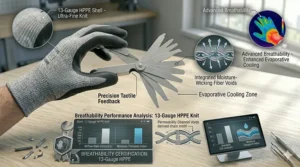
The thinness enabled by HPPE’s strength-to-weight ratio also improves tactile sensitivity. At 13-gauge knit thickness, you can distinguish coin denominations through the glove, feel fastener threads for proper engagement, and maintain the fine motor control needed for precision tasks. Thicker materials providing equivalent cut resistance (like Kevlar at comparable protection levels) sacrifice this sensitivity, forcing users to choose between protection and the ability to actually perform detailed work.
Chemical Resistance and Practical Limitations
HPPE’s chemical inertness—basically, it doesn’t react with much of anything—makes it ideal for food contact and environments with chemical exposure. The non-polar molecular structure means acids, bases, and most organic solvents can’t break down the fiber structure. This durability translates to gloves that maintain protection through repeated washing and exposure to food acids, cleaning agents, and workshop chemicals that would degrade other protective materials.
However, this same chemical inertness creates challenges. HPPE doesn’t bond well to coatings or other materials, which is why manufacturers use mechanical bonding (like nitrile gripping to the knit structure) rather than chemical adhesion. The material also lacks polar groups that would bond to water, making pure HPPE feel slippery against wet or oily materials—hence the need for grip coatings on palms for most work applications.
The thermal limitation deserves honest discussion: HPPE fibers begin losing strength above 90°C (194°F) and have melting points around 127-132°C (261-270°F). This means HPPE gloves offer zero heat protection and can actually melt against hot surfaces, creating serious burn hazards. If your work involves both cut hazards and heat exposure (like welding or foundry work), you need different protection entirely—HPPE excels at cut resistance but fails catastrophically when temperature becomes a factor.
How to Choose the Right ANSI Cut Level for Your Needs
The ANSI/ISEA 105 standard expanded to nine protection levels in 2016 specifically because the old five-level system couldn’t adequately distinguish modern high-performance materials. Understanding what these numbers actually mean—and more importantly, what hazards they protect against—prevents both under-protection (choosing A3 when you need A6) and wasteful over-protection (buying A9 when A5 would suffice). The official ANSI/ISEA 105-2024 standard provides comprehensive guidelines for hand protection classification.
Decoding ANSI Levels: What the Numbers Really Mean
ANSI cut levels measure the grams of force required to cut through the material using a standardized straight-edge blade moving across the fabric under controlled conditions (the ASTM F2992-15 test method). Here’s the current scale:
- A1: 200-499 grams — Basic protection for materials with minimal sharp edges
- A2: 500-999 grams — Light cut hazards like cardboard, plastic edges
- A3: 1000-1499 grams — Moderate hazards including light metal, wood with splinters
- A4: 1500-2199 grams — Medium cut hazards from sheet metal, glass edges
- A5: 2200-2999 grams — Significant hazards including sharp knives, broken glass
- A6: 3000-3999 grams — Heavy-duty protection for industrial blades
- A7: 4000-4999 grams — Extreme industrial applications
- A8: 5000-5999 grams — Near-maximum protection for extreme scenarios
- A9: 6000+ grams — Highest available protection for maximum hazards
The key insight most buyers miss: these aren’t linear progressions. The jump from A5 to A6 represents roughly 33% more cut resistance, while A3 to A4 is about 50% increase. The expanded scale addresses the clustering problem where the old “Level 4” category spanned from 1500 to 3499 grams—a 233% range that made product comparisons nearly impossible.
Matching Protection to Real-World Hazards
For kitchen applications—mandoline slicing, oyster shucking, meat deboning—ANSI A4 to A5 provides appropriate protection for most scenarios. The blade forces in these applications rarely exceed 2,500 grams even during accidents, and A5 gloves deliver that protection with maximum dexterity for the precision work required. Professional butchers working with heavier knives and processing larger cuts might benefit from A6 or higher, but most home cooks and even restaurant prep workers find A5 sufficient.
Glass handling requires different analysis. Thin sheet glass creates moderate cut hazards (A4-A5 appropriate), but tempered glass shards from breakage can exceed 4,000 grams of applied force in sudden impact scenarios. For installation and removal work where glass breakage risk exists, A6-A7 gloves provide better margins of safety. The same logic applies to sheet metal fabrication: smooth-edged stock needs A4-A5, but freshly sheared metal with burrs and sharp edges justifies A6 or higher.
Woodworking presents mixed hazards. Router work, table saw operations, and hand tool use generally create moderate cut risks where A4-A5 gloves balance protection with the tactile sensitivity needed to guide work safely. However, the real danger in woodworking often isn’t blade contact but splinters and rough-sawn lumber—hazards better addressed by abrasion resistance than cut protection. For chainsaw work, remember that gloves claiming cut resistance from chains are using different test methods entirely and shouldn’t rely on ANSI ratings alone.
The Over-Protection Trap Nobody Discusses
Here’s an uncomfortable truth: buying maximum protection when you don’t need it can actually reduce safety. A9-rated gloves achieve their cut resistance through either thicker materials, tighter weaves, or heavier reinforcement—all of which reduce dexterity and tactile feedback. When workers can’t feel what they’re handling properly, they compensate by gripping harder, moving more slowly, or working in awkward positions. This increased effort leads to faster fatigue, and fatigue is when accidents happen.
The solution isn’t to go lighter on protection than hazards demand, but to honestly assess your actual risks rather than defaulting to “maximum protection just in case.” If you’re slicing vegetables for meal prep, A5 gloves deliver total security without the bulk penalty of A9 alternatives. If you’re breaking down automotive wrecks with torches and sharp metal everywhere, that’s when A8-A9 makes sense. Match protection to threat level, then use the dexterity and comfort margin you preserved to work more safely overall.
Essential Features Beyond Cut Resistance: What Else Matters
ANSI cut rating dominates purchasing decisions, but several other factors determine whether gloves actually get used consistently versus sitting in a drawer. The best protection in the world doesn’t work if it’s uncomfortable enough that you skip wearing it for “quick tasks”—which is exactly when most injuries occur.
Grip Performance: Why Coatings Make or Break Usability
Pure HPPE fiber, for all its strength advantages, feels slippery against smooth materials. The non-polar molecular structure that gives HPPE its chemical resistance also prevents it from bonding effectively to water or oils, creating a low-friction surface that can’t grip wet tomatoes, oily metal parts, or slick plastic. This is why most HPPE gloves feature palm coatings—but not all coatings perform equally.
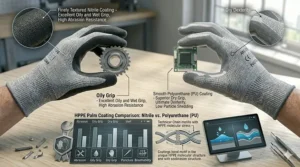
Nitrile coatings dominate the work glove market because they balance grip, durability, and chemical resistance effectively. Water-based nitrile formulations (like DEX FIT uses) avoid the solvent exposure and chemical residues of older coating processes, making them food-safe and less likely to trigger contact allergies. Sandy nitrile textures (Schwer ProGuard’s choice) maximize grip in oily conditions but feel coarse during precision assembly—the aggressive texture that grabs greasy steel beams becomes a liability when you’re routing cables through tight spaces.
Polyurethane coatings offer superior tactile sensitivity and flexibility compared to nitrile but sacrifice some durability and oil resistance. For electronics assembly, precision mechanical work, or tasks requiring maximum “feel,” PU coatings excel. However, they wear through faster than nitrile under heavy abrasion, making them better suited for precision trades than heavy industrial use. No coating lasts forever—budget for replacement when palm coating shows cracking or delamination rather than trying to extend service life until complete failure.
Sizing and Fit: The Most Underestimated Safety Factor
A glove that’s too large creates bunching at fingertips and palms, reducing both dexterity and actual protective coverage as the material slides around during use. Too small creates restricted blood flow, hand fatigue, and reduced range of motion—plus the temptation to just not wear them because they’re uncomfortable. Yet most buyers treat sizing as an afterthought, ordering “medium” by default or assuming one-size-fits-all solutions actually fit.
Proper sizing requires measuring hand circumference at the widest point (usually across the knuckles with hand flat) and comparing against manufacturer sizing charts—which vary significantly between brands. A medium in NoCry may fit differently than a DEX FIT medium despite both claiming 8-inch hand circumference ranges. For work gloves worn daily, ordering two sizes to test fit before committing to multi-pack purchases avoids the waste of buying gloves that don’t actually get used.
The ambidextrous versus hand-specific debate affects both cost and functionality. Ambidextrous gloves (one design works on either hand) reduce inventory complexity and replacement costs, but truly anatomically designed gloves provide better fit around the thumb curve and web spacing. For occasional use, ambidextrous designs offer flexibility. For full-shift wear, spending extra for proper left/right matching pays off in reduced fatigue.
Breathability Versus Protection: Managing the Trade-Off
Higher cut resistance generally requires either denser weaves or additional material layers, both of which reduce airflow. A9-rated gloves trap more heat than A5 alternatives at comparable thickness because the tighter fiber packing needed for extreme cut resistance also blocks air circulation. This creates a no-win scenario in hot environments: you need the protection, but the heat buildup becomes unbearable.
Coating coverage affects breathability significantly. Full-palm nitrile dips (covering the entire palm and fingers) provide maximum grip and abrasion protection but eliminate airflow through those areas. Palm-only coatings maintain breathability across the back of the hand while providing grip where needed, though they offer less abrasion resistance on finger pads. For extended wear in air-conditioned environments, full coatings work fine. For outdoor summer work or non-climate-controlled shops, minimizing coating coverage helps prevent the swampy-hand misery that makes workers remove protection.
Some manufacturers address this through strategic ventilation: laser-perforated coatings, mesh back panels, or moisture-wicking liner materials. These features add cost but dramatically improve wearability during long shifts. For workers wearing gloves 40+ hours weekly, investing in ventilated options reduces the fatigue and discomfort that leads to removing protection—which defeats the entire purpose of buying high-quality gloves in the first place.
HPPE Gloves for Different Applications: Matching Products to Tasks
The seven products we’ve examined represent different optimization points along the protection-versus-dexterity curve. Understanding which compromises matter for your specific application prevents buying the wrong solution for your actual needs.
Kitchen and Food Prep: Safety Meets Hygiene Requirements
For food-contact applications, FDA food-safety certification isn’t optional—it’s legally required if the glove material touches food directly. This eliminates some otherwise excellent industrial gloves that use coatings or treatments with non-food-safe additives. The Anchor Safety Gear Level 5 and Level 9 gloves both carry explicit food-grade certification, as does the DEX FIT Cru553 with its OEKO-TEX approval.
Mandoline slicing represents the highest-risk common kitchen task. The razor-sharp blade moves at high speed across the hand holding the food, and even momentary inattention puts fingers directly in the cutting path. ANSI A5 protection handles this scenario confidently—A9 offers overkill protection that reduces the tactile feedback needed to judge when you’re approaching the blade guard. For oyster shucking, where the knife frequently slips and the oyster hand absorbs the force, A5 again provides sufficient protection while maintaining the grip needed to stabilize wet, slippery shells.
Meat cutting and deboning create different hazard profiles. Professional butchers breaking down hanging beef or pork carcasses work with longer, heavier knives that can generate significant blade force. Here, A6-A9 protection makes sense, especially if processing volume means extended periods of continuous cutting. The Dowellife steel mesh excels in commercial processing environments where stab resistance (from boning knife points) matters as much as cut protection. For home cooks breaking down occasional chickens or trimming roasts, A5 gloves like the NoCry Professional provide adequate protection without the bulk that impedes precision deboning work.
Workshop and DIY: Balancing Protection With Tool Control
Woodworking demands gloves that don’t compromise the fine motor control needed to guide stock through table saws, position router bits, or maintain proper hand tool grip. Over-protected hands reduce tactile feedback to the point where workers can’t judge feed pressure or feel when stock begins to shift—ironically creating new hazards while preventing cuts. ANSI A4-A5 gloves hit the sweet spot for most shop work, providing cut resistance against accidental blade contact and splinter protection while maintaining the sensitivity to work safely.
Glass handling and installation requires different analysis. Unbroken architectural glass creates relatively low cut hazards (smooth edges, predictable handling), where A4 protection suffices for most residential work. However, the catastrophic failure mode—tempered glass shattering into thousands of razor-sharp fragments—demands higher protection. Commercial glaziers working daily should consider A6-A7 gloves that provide margins of safety for the high-force impacts that occur when large panels crack unexpectedly. The grip coating becomes crucial here: trying to hold a 40-pound glass panel with uncoated HPPE creates high drop risk, which creates the exact breakage scenario you’re trying to protect against.
Metal fabrication spans a huge hazard range. Light sheet metal work with deburred edges needs A4-A5 protection, while working with freshly sheared steel or cutting aluminum with sharp burrs requires A6-A7. The Schwer ProGuard with its metal wire reinforcement addresses both cut and puncture scenarios common when handling large metal parts with multiple sharp edges and protrusions. For automotive repair work involving sharp edges but also requiring significant wrenching force and tool manipulation, the challenge becomes finding gloves protective enough for the hazards but thin enough to maintain tool control—which is why many mechanics compromise by using lighter protection and accepting higher cut risk in exchange for being able to actually do their jobs.
Industrial and Professional Use: When Maximum Protection Justifies The Cost
For occupations where hand injuries shut down production and trigger workers’ compensation claims, the economics shift dramatically. A $35 pair of A9 gloves becomes trivial insurance against injuries that cost thousands in medical bills, lost productivity, and regulatory compliance headaches. Commercial meat processing, manufacturing operations with exposed blades, and recycling operations with unpredictable sharp debris all justify maximum protection.
The key difference in professional versus home use: volume and duration. Processing 500 pounds of meat daily versus breaking down one chicken weekly represents a 35X difference in hazard exposure. That amateur woodworker making weekend projects logs maybe 100 hours annually on tools, while the professional cabinet maker hits 2,000+ hours—a 20X exposure difference. Higher exposure rates justify both maximum protection levels and premium features like reinforced wear zones and ventilated coatings that improve long-term wearability.
Professional applications also demand consideration of total cost of ownership rather than just purchase price. Gloves requiring replacement every month at $15/pair cost $180 annually, while $35 gloves lasting six months with proper care cost $70 annually—less than half the total expense. This calculation explains why professional users often gravitate toward premium products that DIY users dismiss as overpriced.
Smart Buying Guide: Getting the Best Value for Your Protection Dollar
Price alone doesn’t determine value—the calculation requires considering protection level, durability, intended use frequency, and replacement costs over time. A $10 pair of gloves worn twice yearly for light tasks delivers better value than $30 gloves sitting unused because they’re “too nice” for everyday work.
Budget-Conscious Shopping Without Sacrificing Safety
The Evridwear colored gloves at $10-$16 and Anchor Safety Gear Level 5 at $12-$18 represent legitimate protection at prices that remove psychological barriers to consistent use. For home users and hobbyists, these entry-level options deliver ANSI A5 certification that handles the vast majority of household cutting hazards without the premium pricing that makes you hesitate to actually wear them for “minor” tasks where injuries frequently occur.
Multi-pack options deserve serious consideration despite higher upfront costs. A 3-pack of DEX FIT gloves at around $40 costs $13.33 per pair versus $18-20 for singles—that’s a 30-40% savings. For family households or workshops where multiple users need different sizes, buying a variety pack ensures proper fit for everyone while maintaining per-pair costs competitive with budget options. The key is honest assessment of actual use: if you’ll genuinely use all three pairs over the product lifespan, multi-packs save money. If two pairs will sit in a drawer unused while the third wears out, you’ve paid for redundancy you didn’t need.
Sales and seasonal pricing can drop premium gloves into budget territory—NoCry and DEX FIT products frequently see 20-30% discounts during holiday promotions. Setting price alerts on Amazon or subscribing to manufacturer newsletters catches these opportunities. However, avoid the false economy of buying “bargains” in wrong sizes or protection levels that don’t match your needs—a discounted A9 glove you never wear because it’s too bulky delivers zero value regardless of price savings.
When Premium Features Justify Higher Prices
Reinforced thumb crotches add maybe $2-3 to manufacturing costs but can double service life from 4-6 months to 8-12 months of heavy use. That $3 upfront premium saves $20 in replacement costs over a year of professional use—a 667% return on investment. NoCry and Schwer both implement thumb reinforcement, which explains their slightly higher pricing compared to otherwise similar products.
Touchscreen compatibility seems like a gimmick until you’re wearing gloves daily and need to check work orders, respond to messages, or reference digital diagrams without the constant glove-off, glove-on cycle. For professionals billing by the hour, those 30-second delays add up—five touchscreen interactions daily saves maybe 15 minutes weekly, or 12 hours annually. At $50/hour billing rates, that’s $600 in recovered productivity versus maybe $10 extra for touchscreen-compatible gloves. Even for non-billable work, the convenience factor reduces the temptation to just remove gloves for “quick phone checks” that become the exact moment an injury occurs.
Advanced coating technologies—water-based nitrile, strategic ventilation, anti-microbial treatments—typically add $5-10 to glove pricing. For occasional use, these features may not justify costs. For daily wear, especially in hot environments or food-service settings where bacteria growth creates hygiene concerns, the improved comfort and sanitation pays for itself through reduced replacement frequency and better user compliance.
Avoiding Common Purchasing Mistakes
The biggest trap: defaulting to maximum protection regardless of actual hazard level. Buying A9 gloves for kitchen mandoline use doesn’t make you safer than A5 alternatives—it makes the gloves bulkier and less comfortable, reducing the odds you’ll consistently wear them. Right-sized protection that actually gets used beats over-protection that sits in a drawer.
Size confusion costs buyers significantly. Many people order “medium” by default or assume their dress glove size translates to work glove sizing. Taking 60 seconds to measure hand circumference and compare against actual sizing charts prevents buying gloves that don’t fit properly—which means they don’t get worn consistently. If vendor sizing charts show you’re between sizes, order both and return the non-fit rather than guessing wrong and being stuck with unusable protection.
Brand confusion between similar product lines leads to mismatched expectations. Manufacturers often sell multiple versions with nearly identical names but different specifications—DEX FIT offers probably a dozen different “cut-resistant” models with varying ANSI ratings, coatings, and features. Reading the specific ANSI rating and features list rather than assuming “DEX FIT cut resistant glove” automatically delivers the protection and features you want prevents disappointment when the $12 budget model arrives instead of the $25 premium version.
Care and Maintenance: Maximizing Glove Lifespan and Protection
Even the best HPPE gloves degrade if maintained poorly, while proper care extends service life and maintains protection levels well beyond casual users’ expectations. The difference between 3-month and 12-month useful life often comes down to washing technique and storage practices.
Proper Washing to Maintain Cut Resistance
Machine washing HPPE gloves in hot water with harsh detergents accelerates fiber degradation and coating breakdown. The heat weakens the polymer structure gradually, while aggressive detergents attack the molecular bonds in coatings. Following manufacturer guidelines—typically cool water (under 40°C/104°F), mild detergent, gentle cycle—maintains both fiber integrity and coating adhesion through repeated wash cycles.
Air drying preserves glove structure better than machine drying. The tumbling action in dryers mechanically stresses the knit structure, accelerating the development of weak points where fibers have begun separating. The high heat accelerates HPPE polymer degradation, particularly in lower-quality materials where processing didn’t achieve optimal chain extension. Hanging gloves to drip-dry takes longer but preserves the carefully engineered fiber alignment that delivers cut protection.
Washing frequency should balance hygiene requirements against mechanical wear from the washing process itself. For food-contact applications, daily washing may be legally required and practically necessary to prevent bacterial growth. For workshop use, washing when visibly soiled or after exposure to chemicals makes more sense than arbitrary daily washing. The key insight: each wash cycle causes incremental wear, so washing unnecessarily shortens service life without providing additional safety benefits.
Storage Best Practices
Storing HPPE gloves in direct sunlight accelerates UV degradation of the polymer chains. While HPPE shows better UV resistance than many synthetic fibers, prolonged exposure still gradually weakens the material through photochemical breakdown of molecular bonds. Keeping gloves in drawers, tool cabinets, or protective pouches when not in use prevents this photodegradation.
Temperature extremes affect HPPE differently than most protective materials. While the fibers tolerate cold well (remaining flexible down to -150°C), storing them in hot environments (like car trunks in summer or near heat sources) can begin thermal degradation processes that reduce strength over time. Room temperature storage in dry conditions preserves glove properties indefinitely for properly manufactured products.
Moisture control prevents mold and bacterial growth in gloves stored after use while still damp. For single-shift workers, bringing gloves home to fully dry overnight works fine. For multi-shift operations where gloves need to be ready for the next user in 8 hours, having multiple sets in rotation ensures each pair gets adequate drying time between uses. Storing damp gloves in sealed containers creates the perfect environment for bacterial and fungal growth that creates both hygiene hazards and material degradation.
Knowing When to Replace
Visual inspection catches many failure modes before they compromise safety. Coating delamination shows as peeling or flaking palm surfaces—when coatings begin separating from the base material, grip performance drops and continued use accelerates complete coating failure. Holes or thinning in the knit structure, particularly at stress points like fingertips and thumb webs, indicate the fiber structure is failing. These damaged areas provide dramatically reduced cut protection even if the rest of the glove remains intact.
Tactile changes signal internal degradation not always visible externally. Gloves that feel stiffer or less flexible than when new have begun polymer degradation that reduces both comfort and protection. Loss of elastic recovery—when stretched areas don’t return to original dimensions promptly—indicates the fiber structure has lost its engineered alignment. Any glove that feels noticeably different from its original state deserves careful inspection and probable replacement.
For professional applications where glove failure creates serious injury risk, implementing scheduled replacement based on hours of use provides more reliable protection than waiting for visible failure signs. Manufacturers’ ratings typically suggest replacement intervals (e.g., “200 hours of use” or “6 months with proper care”), and while these seem conservative, they build in safety margins that account for use cases more demanding than average. In high-liability environments, the cost of premature replacement beats the cost of injuries from worn-out protection.
Beyond Cut Resistance: What HPPE Gloves Can’t Protect Against
Understanding HPPE limitations prevents dangerous misapplication. These gloves excel at specific hazards but fail catastrophically at others—and those failures can create worse injuries than no protection if users mistakenly believe they’re protected.
Heat and Thermal Hazards: The Critical Weakness
HPPE melts at temperatures around 127-132°C (261-270°F), and the fibers begin losing strength well before reaching melting point. Contact with hot surfaces, welding sparks, or open flames can cause instant glove failure and severe burns as melted polymer adheres to skin. Unlike aramid fibers (Kevlar) that char and self-extinguish, HPPE melts and continues burning, creating progressive injury that worsens the longer melted material contacts skin.
For any application involving heat exposure—welding, foundry work, commercial cooking with hot surfaces, automotive work near exhaust components—HPPE gloves provide zero thermal protection and actively create burn hazards. These scenarios require heat-resistant materials (leather, aramid, aluminized fabrics) even if they offer lower cut protection, because the burn risk vastly outweighs cut hazards in high-temperature environments.
The insidious danger: HPPE’s other excellent properties (lightweight, comfortable, cut-resistant) make users forget its thermal limitations until the moment of contact. Unlike obviously inadequate protection (like wearing cloth gloves for welding), HPPE gloves seem robust enough that workers might not mentally register the heat vulnerability. Proper training and clear labeling about thermal limitations prevents this dangerous assumption.
Puncture Resistance: Not All Sharp Hazards Are Equal
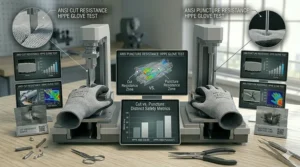
Cut resistance and puncture resistance measure fundamentally different failure modes. ANSI cut testing uses a blade moving laterally across fabric under controlled load—it measures resistance to slicing action. Puncture testing drives a pointed probe straight through material—it measures resistance to penetration by concentrated force on a small point.
Standard HPPE gloves show poor puncture resistance relative to their cut ratings. The fiber weave that distributes lateral blade forces effectively concentrates point loads into small areas where individual yarns fail sequentially. For hazards involving needles, wire ends, sharp metal points, or fish hooks, pure HPPE provides minimal protection despite impressive cut resistance numbers. This explains the Dowellife steel mesh design—the metal reinforcement specifically addresses puncture scenarios where HPPE alone would fail.
Applications requiring both cut and puncture protection demand hybrid designs (like Schwer’s metal wire reinforcement) or layered solutions. Medical waste handling, commercial fishing, recycling operations with wire and needles, and metal fabrication with welding slag all create mixed hazard profiles where cut-only protection leaves serious vulnerabilities. Reading manufacturer specifications carefully to verify puncture ratings alongside cut levels prevents dangerous mismatches between protection and actual hazards.
Chemical and Biological Hazards
While HPPE’s chemical inertness resists degradation from many common chemicals, the material provides zero barrier protection against liquid penetration. The knit construction creates gaps between fibers that liquids penetrate readily—applying HPPE gloves as chemical protection against corrosive or toxic liquids is dangerously inadequate.
For chemical handling, sealed nitrile or latex gloves designed specifically for chemical resistance provide necessary barrier protection. Some HPPE gloves feature chemical-resistant coatings, but these only protect the coated surfaces (typically palms and fingers). Any chemical exposure to uncoated areas, or coating damage that creates pathways through to the HPPE base, eliminates barrier protection. Reading chemical resistance certifications carefully and matching glove construction to specific chemical hazards prevents assuming cut-resistant gloves provide protection they never claimed.
Biological hazards—bloodborne pathogens, infectious materials, medical waste—require sealed gloves preventing fluid penetration. HPPE’s open knit construction offers no barrier against contaminated fluids. For medical, veterinary, or waste handling applications involving biological hazards, dedicated medical-grade nitrile or latex gloves provide necessary protection. Some manufacturers offer HPPE gloves with sealed coatings specifically rated for medical use, but these remain specialized products distinct from standard cut-resistant work gloves.
Frequently Asked Questions About HPPE Cut Resistant Gloves
❓ What ANSI cut level do I need for kitchen mandoline slicing and vegetable prep?
❓ Can HPPE cut resistant gloves be safely machine washed without losing protection?
❓ How do HPPE gloves compare to Kevlar for cut protection and price?
❓ Are touchscreen-compatible HPPE gloves actually functional or just marketing hype?
❓ What's the difference between HPPE and UHMWPE materials in cut-resistant gloves?
Conclusion: Making the Right Protection Choice for Your Specific Needs
After examining seven distinct HPPE cut resistant gloves across multiple price points and protection levels, the core insight remains: the “best” glove is the one that matches your actual hazard profile while being comfortable enough that you’ll consistently wear it. Maximum protection sitting in a drawer protects nobody, while right-sized protection that gets used prevents real injuries.
For home cooks and casual kitchen users, the Anchor Safety Gear Level 5 or Evridwear colored gloves deliver legitimate ANSI A5 protection at prices that remove psychological barriers to consistent use. These aren’t professional-grade tools, but they don’t need to be—they address weekend cooking hazards without the premium pricing that makes you hesitate to actually wear them for “minor” tasks where injuries frequently occur.
Professional users and those facing genuine high-hazard scenarios benefit from investing in A6-A9 protection with premium features. The Schwer ProGuard and Dowellife steel mesh gloves cost 2-3X entry-level alternatives, but they deliver protection levels and durability that justify the investment through injury prevention and extended service life. For commercial applications where hand injuries trigger workers’ compensation claims and production shutdowns, these premium options become insurance policies with extraordinary return on investment.
The DEX FIT Cru553 and NoCry Professional gloves occupy the sweet spot for serious hobbyists and light professionals: ANSI A5 certification provides substantial protection for the majority of workshop and kitchen hazards, while maintaining the dexterity and comfort needed for precision work. The $15-25 price range positions these as accessible serious protection rather than disposable safety theater.
Understanding ANSI cut levels, HPPE material properties, and the specific hazards you actually face empowers informed decisions. Don’t buy maximum protection because it seems safer without considering whether you’ll actually wear gloves too bulky for your precision work. Don’t skimp on protection for genuine hazards just to save $10. Match glove specifications to real risks, prioritize features that improve consistent use, and replace gloves when they show degradation rather than trying to extend service life beyond safe limits.
The technology in modern HPPE gloves genuinely represents breakthrough protection that was unavailable even a decade ago. Materials developed for military armor and medical implants now deliver hand protection that’s simultaneously stronger than steel and lighter than cotton. Taking advantage of this technology requires understanding both its capabilities and its limitations—which is exactly what this guide provides.
Recommended for You: Related Articles
- 7 Best Kevlar Cut Resistant Gloves 2026
- 7 Best ANSI A9 Cut Resistant Gloves for Ultimate Protection (2026)
- 7 Best ANSI A8 Cut Resistant Gloves (2026 Buyer’s Guide)
Disclaimer: This article contains affiliate links. As an Amazon Associate, I earn from qualifying purchases. If you purchase products through these links, we may earn a small commission at no additional cost to you.
✨ Found this helpful? Share it with your friends! 💬🤗
